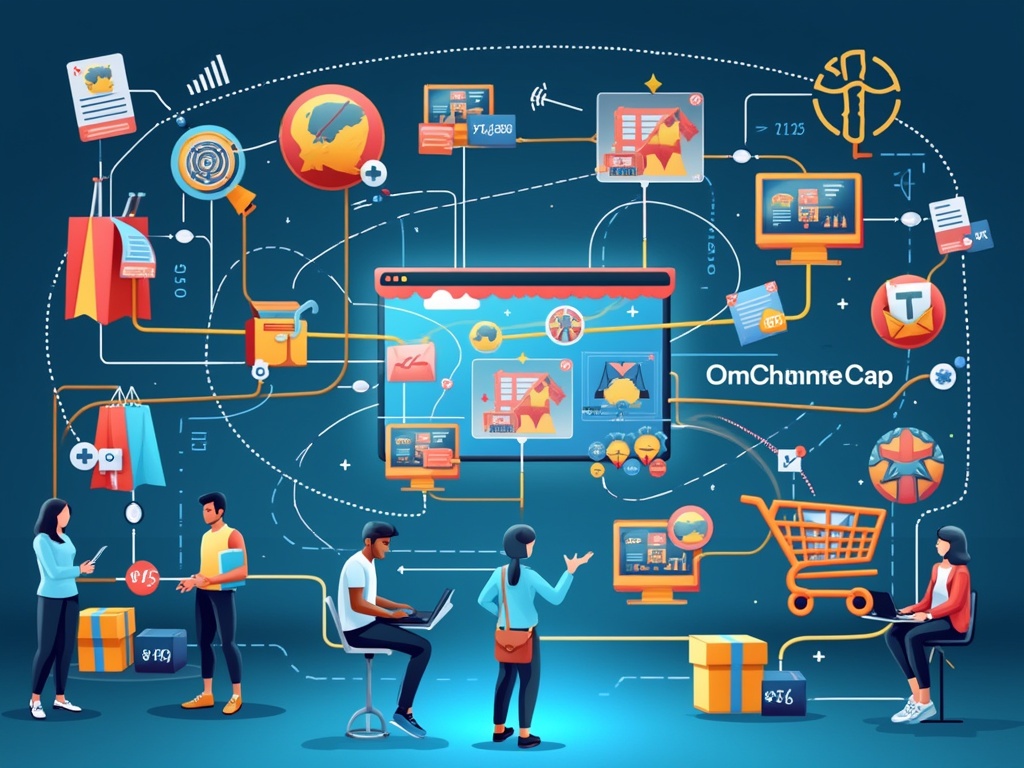
Omnichannel Commerce: Focusing on 360-degree retail solutions to boost sales
Omnichannel commerce is revolutionizing the retail landscape by providing 360-degree solutions to boost sales. This approach integrates multiple channels to create a unified customer experience, resulting in increased loyalty and revenue. Recent data shows that 78% of customers use multiple channels during their purchase journey, highlighting the critical need for businesses to adopt comprehensive retail strategies.
Key Takeaways:
- Seamless integration across online, offline, and mobile platforms is essential
- Customers using four or more channels spend 9% more in-store
- Omnichannel shoppers make 23% more repeat purchases within six months
- Companies focusing on customer experience gain an average of $700 million annually within three years
- 95% of customers use at least three channels in a single interaction with a company
The Omnichannel Imperative: Adapting to Modern Retail Dynamics
Omnichannel commerce has become a cornerstone of successful retail strategies. It’s an approach that focuses on providing a consistent and seamless customer experience across all channels, including online platforms, brick-and-mortar stores, and mobile applications. This integrated method is crucial in today’s retail environment, where customer behavior is increasingly complex and varied.
Recent statistics highlight the importance of adopting omnichannel strategies. For instance, 52% of B2C buyers and 58% of B2B buyers research products online before visiting a physical store. This trend underscores the need for retailers to maintain a strong presence across multiple channels and ensure consistency in their messaging and offerings.
The goal of omnichannel commerce is to create a unified brand experience, regardless of where or how a customer chooses to interact with a business. This approach not only enhances customer satisfaction but also drives sales and fosters loyalty.

Maximizing Benefits through Comprehensive Retail Solutions
Implementing 360-degree retail solutions offers numerous advantages for businesses aiming to boost sales and improve customer relationships. Here are some key benefits:
Enhanced Customer Experience
Omnichannel strategies create a unified experience across all touchpoints. Customers can start their journey on one channel and seamlessly continue on another, leading to higher satisfaction and increased engagement. Studies show that customers using four or more channels spend an average of 9% more in-store compared to single-channel customers.
Increased Customer Loyalty
A cohesive omnichannel approach fosters stronger customer relationships. Research indicates that customers who have an omnichannel shopping experience make 23% more repeat shopping trips within six months compared to those who don’t. This increased loyalty translates to more consistent revenue and a higher likelihood of brand recommendations to friends and family.
Substantial Sales Growth
Omnichannel customers are more valuable to businesses. They spend 10% more online and 15-30% more overall compared to single-channel consumers. Furthermore, companies that prioritize customer experience through omnichannel strategies can expect to gain an average of $700 million annually within three years.
Crafting an Effective Omnichannel Strategy
To fully leverage the benefits of omnichannel commerce and implement 360-degree retail solutions, businesses need to focus on several key areas:
Seamless Channel Integration
Breaking down boundaries between physical and online channels is crucial. This involves:
- Unifying customer data across all platforms
- Ensuring consistent pricing and product information
- Enabling cross-channel functionalities like buy online, pick up in-store (BOPIS)
Data-Driven Personalization
Utilizing combined customer data from various channels allows for highly personalized experiences. Implement real-time interactions using automation to tailor product recommendations, offers, and communications based on individual customer preferences and behaviors.
Optimized Operations and Logistics
Efficient operations are the backbone of successful omnichannel strategies. Consider the following:
- Partnering with top-tier logistics and e-commerce providers
- Implementing “endless aisle” concepts for improved inventory management
- Utilizing advanced analytics for demand forecasting and stock optimization
Measuring Success in Omnichannel Retail
To gauge the effectiveness of omnichannel strategies and 360-degree retail solutions, businesses should track several key metrics:
Customer Engagement Across Channels
Monitor how customers interact with your brand across different touchpoints. With 95% of customers using at least three channels in a single interaction, it’s crucial to analyze cross-channel behavior and identify opportunities for improvement.
Inventory Efficiency
Omnichannel systems reduce the risk of static and unsold inventory. Track improvements in stock turnover rates and the accuracy of demand forecasting to measure the impact of your omnichannel strategy on inventory management.
Market Penetration and Expansion
Assess how omnichannel initiatives are helping your business reach new customer segments and explore untapped markets. Look for increases in your customer base and sales in new geographical areas or demographics.
Comparing Traditional Retail vs. Omnichannel Approach
| Aspect | Traditional Retail | Omnichannel Approach |
|---|---|---|
| Customer Experience | Fragmented across channels | Seamless and consistent |
| Data Integration | Siloed data | Unified customer data |
| Inventory Management | Channel-specific stock | Unified inventory across channels |
| Marketing Approach | Channel-specific campaigns | Integrated, cross-channel marketing |
| Customer Loyalty | Limited view of customer behavior | Comprehensive understanding of customer journey |
Key Technologies Enabling Omnichannel Retail
| Technology | Function | Impact on Omnichannel Strategy |
|---|---|---|
| AI and Machine Learning | Personalization and predictive analytics | Enhances customer experience and inventory management |
| Cloud Computing | Data integration and accessibility | Enables real-time information sharing across channels |
| Mobile Technology | On-the-go shopping and engagement | Bridges online and offline experiences |
| IoT Devices | Data collection and smart store solutions | Improves in-store experience and inventory tracking |
| AR/VR | Virtual try-ons and immersive experiences | Enhances online shopping and blends digital with physical |
5 Essential Steps to Implement Omnichannel Retail Solutions
- Assess Current Channels and Customer Touchpoints
- Evaluate existing online and offline presence
- Identify gaps in customer journey
- Integrate Data Systems
- Unify customer data across all platforms
- Implement a centralized CRM system
- Develop a Consistent Brand Message
- Ensure uniform branding across all channels
- Create cohesive marketing strategies
- Invest in Technology Infrastructure
- Adopt cloud-based solutions for scalability
- Implement AI and machine learning for personalization
- Train Staff and Align Organizational Structure
- Educate employees on omnichannel principles
- Break down departmental silos
Future Outlook: Evolving Trends in Omnichannel Commerce
As we look ahead, several trends are shaping the future of omnichannel commerce and 360-degree retail solutions:
Advanced Personalization
AI-driven personalization will become more sophisticated, offering hyper-targeted experiences based on real-time data and predictive analytics. This will allow retailers to anticipate customer needs and preferences with unprecedented accuracy.
Augmented Reality Integration
AR technology will play a larger role in bridging the gap between online and offline shopping experiences. Virtual try-ons, immersive product visualizations, and AR-powered in-store navigation will become commonplace, enhancing the overall customer experience.
Voice Commerce
As voice-activated devices become more prevalent, voice commerce will emerge as a significant channel within the omnichannel ecosystem. Retailers will need to optimize their content and platforms for voice search and transactions.
Sustainable and Ethical Retailing
Consumers are increasingly valuing sustainability and ethical practices. Omnichannel strategies will need to incorporate these values across all touchpoints, from eco-friendly packaging to transparent supply chain information.
Social Commerce Integration
Social media platforms will become more integral to the omnichannel experience, with advanced features for in-app purchasing, live shopping events, and seamless integration with e-commerce platforms.
In conclusion, omnichannel commerce and 360-degree retail solutions are not just trends but essential strategies for businesses looking to thrive in the modern retail landscape. By focusing on seamless integration, personalization, and efficient operations, retailers can create compelling experiences that drive customer loyalty and boost sales across all channels.