
Video By Matt Diamante Explains How to Improve SEO and Google Visibility for Free
Video By Matt Diamante Explains How to Improve SEO and Google Visibility for Free shows you straightforward, zero-cost strategies to raise your search rankings and get noticed on Google. This video proves these tactics literally cost you zero dollars and focuses on practical steps you can start using immediately.
You’ll find step-by-step on-page fixes, content ideas, and Google-specific tweaks you can apply today, along with simple ways to measure progress and avoid common mistakes. Matt Diamante, who runs the HeyTony SEO agency, shares real examples so you can take action and see improvement in your visibility.
Overview of the Video and Key Takeaways
The video “This literally costs you zero dollars” by Matt Diamante from HeyTony SEO explains how you can make meaningful SEO improvements without spending money on paid tools or advertising. Matt walks through practical, no-cost strategies that focus on what you control: your content, your site structure, and how you serve searchers’ needs. Throughout, he emphasizes that small, consistent actions accumulate into noticeable organic visibility gains over time.
Summary of Matt Diamante’s main message about zero-cost SEO
Matt’s central message is simple and empowering: you don’t need a big budget to make SEO progress. By using free resources, paying attention to user intent, improving on-page content, and fixing basic technical issues, you can increase organic traffic and rankings. He reinforces that many ranking problems are solvable with effort, attention to detail, and a methodical approach rather than expensive subscriptions or ad spend.
Core principles highlighted by Matt from HeyTony SEO
Matt highlights several core principles: prioritize searcher intent over keywords alone, focus on helpfulness and clarity in content, ensure your site is technically accessible, and use manual research on the SERP to learn what works. He also stresses the importance of iterative improvement—test small changes, measure outcomes, and refine—plus using what’s free and available first, reserving paid tools or campaigns for scaling once you have a validated approach.
Immediate actions viewers can take after watching the video
After watching, you should be able to take immediate steps: audit and update one or two underperforming pages to better match intent, claim and optimize your Google Business Profile if you’re local, run simple keyword discovery using Google itself, fix obvious technical issues like broken links and missing alt text, and improve headings and meta descriptions. These are low-friction tasks that typically require only time and attention.
How the video frames long-term vs. short-term free SEO efforts
Matt frames free SEO as both short-term quick wins and a long-term growth strategy. Short-term efforts include optimizing titles and meta descriptions, fixing broken links, and answering trending questions. Long-term efforts are creating evergreen content, building a logical site structure, and consistently improving content quality to build authority. He emphasizes patience: free SEO compounds over months, so prioritize consistency and iterate based on results.
Why Free SEO Matters
Free SEO matters because organic search remains a major source of discoverable, high-intent traffic. When you rely on zero-cost tactics, you shift the focus from budget constraints to creativity and user value, which often produces sustainable gains without ongoing ad spend.
The value proposition of organic traffic vs. paid channels
Organic traffic brings users actively searching for answers or solutions, which typically results in higher intent and better conversion potential than many paid channels. Once you earn rankings, that traffic can be relatively steady without continuous payment. Paid channels give immediate visibility but cost money every time you show up; organic efforts can deliver long-term returns and better ROI once content and site quality are established.
How small budgets and startups benefit from free SEO tactics
Startups and small budgets benefit because free SEO levels the playing field. You can compete with larger players by focusing on niche topics, local optimization, and highly helpful content. With limited resources, you can allocate time to content that answers very specific user questions, creating relevance that bigger brands may overlook. The compounding nature of SEO also turns early effort into longer-term visibility with minimal ongoing spend.
ROI considerations when using only zero-dollar strategies
If you use only zero-dollar strategies, your ROI is mainly time-to-reward and opportunity cost. The financial outlay is low, but your time investment is the primary cost. That makes it ideal when you or your team can execute consistently. Expect slower initial returns compared to paid campaigns, but potentially higher efficiency over time. Track which actions drive traffic and conversions so your time yields the best return.
Situations when free SEO should be prioritized over paid campaigns
Prioritize free SEO when you have limited budget, when you need sustainable traffic, or when you want to validate product-market fit before scaling paid acquisition. It’s also preferable if your site has foundational technical or content issues—spending on ads while the site offers poor user experience wastes money. Use paid campaigns only when you need immediate visibility or when scaling a proven organic strategy.
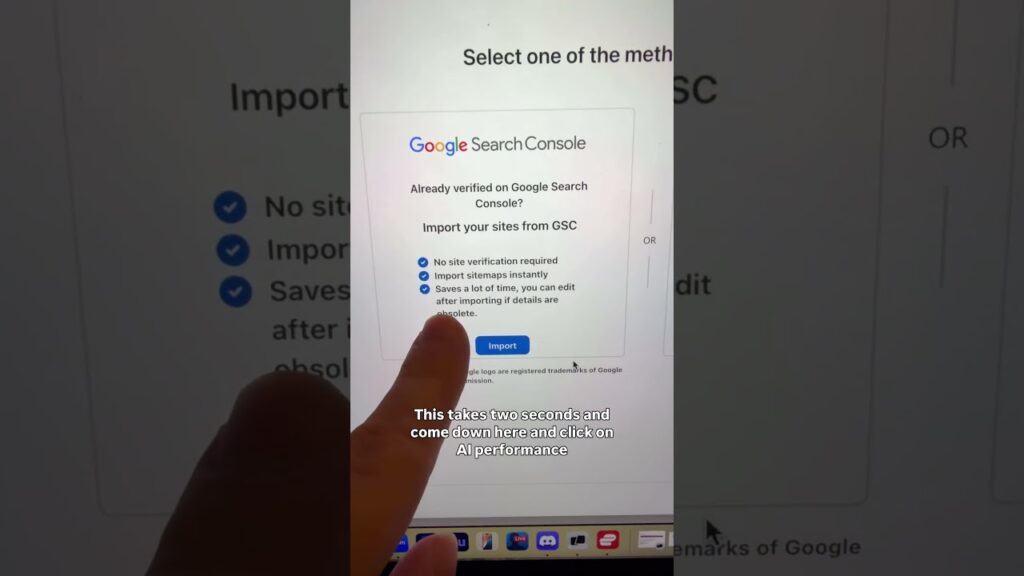
This image is property of i.ytimg.com.
Understanding How Google Ranks Pages
To improve SEO without tools, you must understand the main signals Google uses so you can act effectively. Matt explains these in clear, practical terms and ties them to actions you can take.
Basic ranking factors explained in accessible terms
Google looks at relevance (how well a page answers a query), authority (how trustworthy the page and site are), and user experience (how usable and satisfying the page is). Relevance comes from content and on-page signals; authority is inferred from links, brand recognition, and content depth; user experience includes speed, mobile usability, and time on page. All three interact—strong relevance can overcome lesser authority for specific queries, and good UX helps retain users and reduce bounce.
The role of relevance, authority, and user experience
Relevance tells Google that your content satisfies the searcher’s need. Authority signals that others trust your content and site, often via links or citations. User experience ensures that once someone lands on your page, they can find what they need quickly and without frustration. Matt stresses that you should optimize for all three: craft relevant content, gradually build credibility through quality, and remove UX friction to keep users engaged.
How Google interprets on-page signals and content intent
Google uses on-page signals—titles, headings, body text, structured data, and internal links—to determine what a page is about. It also interprets content intent by looking at query context, the language used, and how similar pages are performing. You can help Google by using clear headings, matching the language of target queries, and addressing the sub-questions searchers have. Avoid keyword stuffing; instead, use natural language that mirrors how users ask questions.
What Matt emphasizes about searcher intent and context
Matt emphasizes that searcher intent is the north star of content creation. If you misalign content with intent—say, offering a product page to a clearly informational query—Google and users will prefer pages that match the intent. He recommends analyzing the SERP to see whether people want how-to guides, product comparisons, local listings, or quick answers, and then structuring your content to deliver that exact experience.
Keyword Research Without Paid Tools
You can discover usable keyword opportunities using Google itself and other free resources. Matt outlines practical ways to gather keyword ideas and assess competition.
Using Google Search suggestions and ‘People also ask’ for ideas
Start typing target phrases into Google and note the autocomplete suggestions; these reflect real search behavior. The “People also ask” box surfaces common related questions you can address in your content. Use these features to compile a list of natural, conversational queries and subtopics that map to user intent.
Leveraging Google Trends and free keyword discovery methods
Google Trends helps you compare interest over time and discover seasonality or rising topics. You can also use related searches at the bottom of SERPs and the “related:” operator to find similar pages. Look for low-competition, long-tail queries that match your expertise. Free browser extensions or spreadsheet methods can help organize findings without paid subscriptions.
Analyzing competitor search snippets and SERP features manually
Manually review the top-ranking pages for your target queries. Read their titles and meta descriptions, note the type of content (blog, product page, Q&A), and observe which SERP features appear—featured snippets, videos, local packs, or knowledge panels. This manual analysis shows what Google deems relevant and helps you design content that fits the SERP format.
Grouping keywords by intent and prioritizing low-competition terms
Group keywords into intent buckets: informational, navigational, commercial investigation, and transactional. Prioritize low-competition, high-intent queries that align with your offering and that you can serve well. Targeting clusters of related keywords with a single comprehensive piece of content can capture varied searchers and build topical authority.

This image is property of pixabay.com.
Optimizing On-Page Content for Zero Cost
On-page optimization is one of the most effective no-cost areas to improve. Small changes to titles, headings, and content structure often yield measurable results.
Writing clear, helpful titles and meta descriptions that match intent
Craft titles that clearly communicate the page’s value and include your primary query naturally. Meta descriptions should summarize the answer or benefit and entice clicks without being misleading. Match the tone and depth to the query—short, direct titles for transactional pages; descriptive titles for informational content.
Structuring content with headings for readability and SEO
Use headings (H1, H2, H3) to break content into digestible sections that map to user questions. Headings help both readers and search engines understand content hierarchy and intent. Make each section answer a distinct subtopic, and use simple, descriptive phrasing in headings to match common search terms.
Using latent semantic keywords and natural language throughout content
Incorporate related terms and synonyms naturally to signal topical depth. Writing in a conversational, user-focused style often covers related phrases without forcing keywords. Address likely follow-up questions and provide examples, lists, and clear explanations to satisfy varied search intents and improve semantic relevance.
Optimizing images with descriptive filenames and alt text for accessibility and SEO
Rename images with descriptive filenames that reflect the content and include relevant keywords when appropriate. Use concise, informative alt text that describes the image for accessibility and for search engines to infer context. Compress images to balance quality and performance; the improvements help UX and can indirectly boost SEO.
Improving Technical SEO for Free
Technical SEO fixes are often straightforward and impactful, and many can be done without paid tools. Matt walks you through the basics that you can check and correct yourself.
Ensuring crawlability by checking robots.txt and XML sitemaps
Confirm that your robots.txt file isn’t blocking important pages and that XML sitemaps are present and up to date. You can view robots.txt by appending /robots.txt to your domain and check for obvious blocks. Ensure your sitemap lists the pages you want indexed and submit it through free Google Search Console once claimed.
Fixing common issues: broken links, duplicate content, and canonicalization
Use free crawling methods or manual checks to find broken links and fix them by updating or redirecting. Duplicate content confuses search engines; consolidate duplicates via canonical tags or redirects. Ensure canonical tags point to the preferred version of a page so Google knows which URL to index and rank.
Improving site speed using free techniques and tools
Speed improvements often don’t require money—optimize images, enable browser caching, minimize render-blocking scripts, and reduce unnecessary plugins or third-party scripts. Use free tools to test performance and prioritize fixes that give the biggest payoff, like image compression and deferring noncritical JavaScript.
Making the site mobile-friendly and testing with free Google tools
Mobile friendliness is critical. Use free mobile testing tools to identify viewport and usability issues. Ensure tap targets are large enough, text is readable without zooming, and content scales correctly. A responsive design and attention to mobile UX improve rankings and user satisfaction.

This image is property of pixabay.com.
Local SEO and Google My Business Optimizations
Local SEO is highly accessible at zero cost and can provide immediate visibility for businesses that serve specific geographic areas.
Claiming and optimizing your Google Business Profile at no cost
Claim and verify your Google Business Profile to control how your business appears in local search and maps. Fill in every applicable field—business hours, services, categories, and a concise description—to help Google match you to local queries. Use photos and regular updates to keep your profile fresh and informative.
Using consistent NAP (name, address, phone) information across listings
Maintain consistent Name, Address, Phone (NAP) information across your site and any directory listings. Inconsistencies cause confusion and can reduce local search visibility. Use the same formatting and details everywhere to reinforce trust signals for local ranking algorithms.
Collecting and responding to reviews without paying for services
Encourage satisfied customers to leave reviews by asking politely and making it easy to do so. Respond to reviews—positive and negative—in a professional and timely manner to show engagement and care for customer experience. Genuine reviews help build credibility and influence local search rank and click-through rates.
Leveraging local content and local schema to boost visibility
Create content that addresses local concerns, events, or guides relevant to your area. Add local schema markup (structured data) to pages where it makes sense—like local business info and events—to help search engines understand your local relevance. These tactics improve chances of appearing in local packs and map results.
Leveraging Content Creation and Blogging
Content creation is a free area where quality effort yields long-term reward. Matt advocates for answering real user questions and creating content that stands the test of time.
Planning content that answers long-tail queries and user questions
Plan content around specific, long-tail queries and the natural questions your audience asks. Use the PAA and related searches you found earlier as a blueprint. Longer-tail topics often have lower competition and higher conversion potential because they match more specific intent.
Repurposing existing content into guides, FAQs, and lists
Audit existing content for underused assets that can be repurposed. Turn a series of posts into an evergreen guide, extract FAQs from long articles, or create listicles that compile helpful resources. Repurposing saves time and lets you consolidate authority on related topics into fewer, stronger pages.
Creating evergreen content that continues to attract traffic
Focus on evergreen topics—questions and how-tos that remain relevant over time. Evergreen content requires occasional updates but continues to attract traffic long after publication. Make these pieces comprehensive and easy to update so they stay useful and rank well.
Promoting content using free channels like social and communities
Promote your content on social media profiles, relevant community forums, and niche groups where your audience hangs out. Share updates in a helpful, non-spammy way and participate in discussions to build credibility. You don’t need paid promotion to get initial traffic; targeted organic sharing often leads to natural links and referrals.

This image is property of pixabay.com.
Using Internal Linking and Site Structure
Internal linking and a logical site structure are powerful, zero-cost ways to distribute authority and help users and search engines navigate your content.
Designing a logical site hierarchy to distribute link equity
Organize pages into a clear hierarchy: home → category/pillar pages → subtopic/supporting pages. This helps distribute link equity from your most authoritative pages to deeper content. A logical structure also makes it easier for search engines to crawl and understand relationships between topics.
Strategically linking to pillar pages and supporting content
Use internal links to point from supporting articles to pillar pages and vice versa. Pillar pages should offer comprehensive coverage and link to deep-dive articles that target specific long-tail queries. This network reinforces topical authority and guides users through your content ecosystem.
Using anchor text responsibly to signal relevance to Google
Choose anchor text that’s descriptive and natural. Avoid over-optimizing anchors with exact-match keywords everywhere, which can look manipulative. Instead, vary anchors using plain language and context so Google can infer relevance without spammy signals.
Auditing internal links with free methods to find orphan pages
Find orphan pages (pages without internal links) by manually reviewing site navigation and sitemaps or by creating a simple spreadsheet of URLs and checking for linking. Add links to orphan pages from relevant content to give them a chance to be crawled and ranked. This audit can be done without paid tools and yields quick improvements.
Conclusion
Matt Diamante’s video convincingly argues that meaningful SEO improvements can cost you zero dollars if you focus on the right, high-impact activities. By combining user-focused content, careful on-page optimization, and free technical fixes, you can build organic visibility without immediate monetary investment.
Recap of the video’s promise that meaningful SEO improvements can cost zero dollars
The promise is straightforward: time, attention, and methodical work can create significant SEO gains without paying for tools or ads. Fixing basics, aligning content with intent, and leveraging free Google features are all accessible and effective steps.
Final practical next steps recommended for immediate implementation
Start with a short checklist: claim your Google Business Profile if you’re local, pick one underperforming page and improve its title, headings, and content to match intent, fix any broken links you find, optimize one or two images, and run a mobile-friendliness check. These quick tasks are practical and high-impact.
Encouragement to adopt a patient, iterative approach for sustainable visibility gains
SEO is a marathon, not a sprint. Be patient, measure results, and iterate. Small, consistent improvements compound over time. Keep learning from the SERPs, from user behavior, and from what works for competitors, and you’ll see steady gains.
Where to find Matt Diamante and HeyTony SEO for further guidance
If you want more of Matt’s perspective, look to content and channels produced by HeyTony SEO where he shares detailed tips and case examples. His guidance focuses on practical, no-nonsense tactics that you can apply without major expenditures—perfect if you’re aiming to grow visibility on a zero-dollar approach.