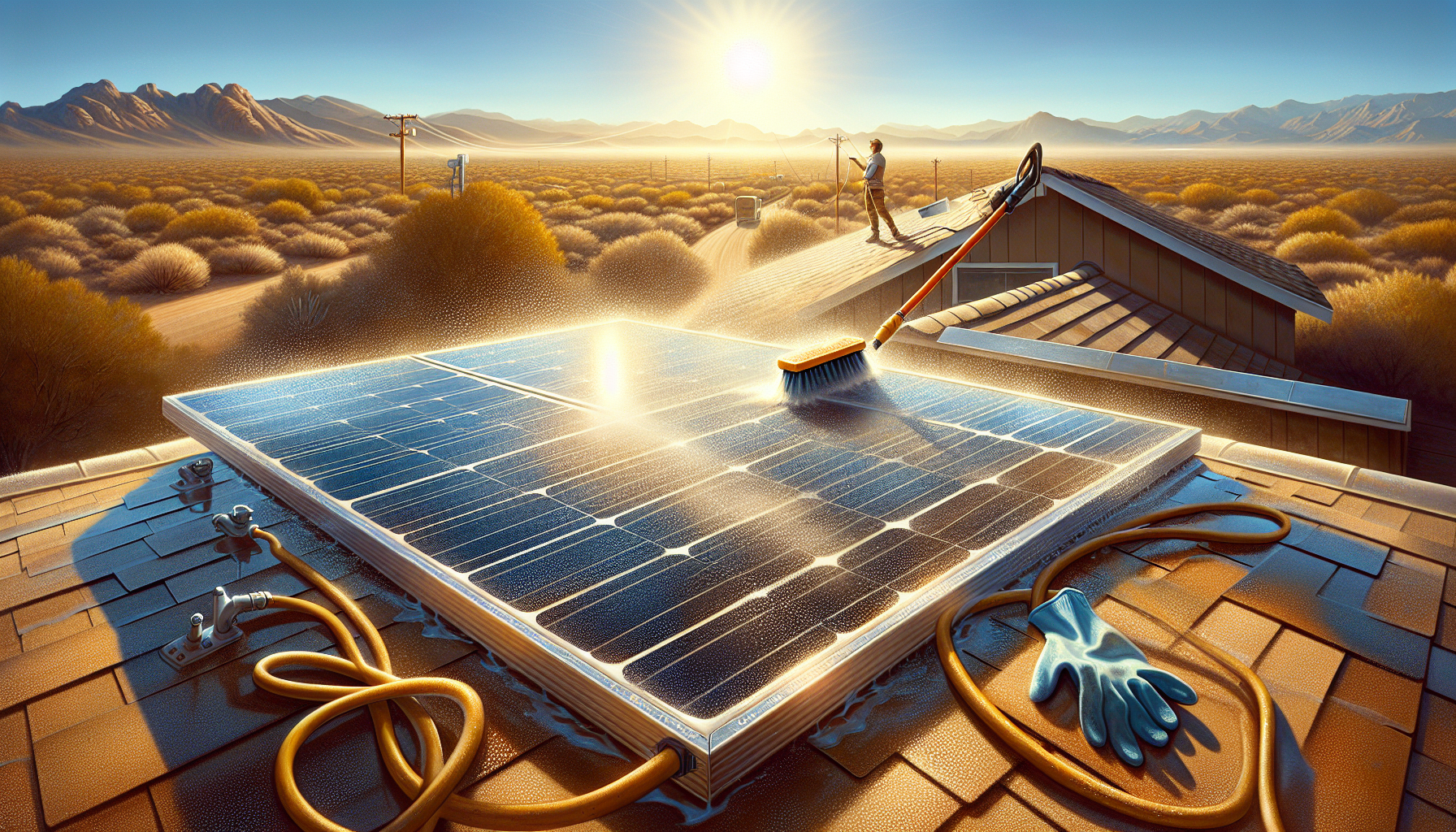
Solar Panel Maintenance Tips For Nevada Homes
?Are you looking for practical, reliable ways to keep your solar panels performing at their best in Nevada’s unique climate?
Nevada’s abundant sunshine makes solar an excellent investment, but your system still needs regular attention to keep it producing efficiently and to protect your warranty and ROI. This guide gives you friendly, step-by-step solar panel maintenance tips specifically for Nevada homes, including what you can do safely yourself, when to call a certified installer like Nevada Solar Group, and how to maintain integrated systems such as Tesla Powerwall battery backups and EV charging.
Why regular solar panel maintenance matters in Nevada
Keeping your solar system well-maintained helps you maximize energy production, reduce wear and tear, and maintain safety. With Nevada’s intense sun, dust storms, and occasional hail, proactive maintenance preserves performance and protects warranties.
You’ll also find that consistent care can reveal small issues before they become costly repairs, and it ensures that integrated elements like battery backups and EV chargers continue to operate reliably.
Nevada climate and its effects on solar systems
Nevada’s arid climate means lots of sunshine but also significant dust, sand, and occasional grit from wind events, which can reduce panel output. High daytime temperatures can increase panel operating temperatures and slightly reduce efficiency, while thermal cycling can slowly stress modules and connectors.
You should pay particular attention to soiling (dust and sand accumulation), potential shading from new landscaping, and weather-related damage such as hail or wind-driven debris. Monitoring and seasonal cleaning are especially important in this region.
Basic safety and tools for solar maintenance
Safety is your top priority when working on or near solar arrays. Before any rooftop work, isolate the system if possible, use fall protection, and never attempt electrical repairs unless you are a licensed professional.
Common tools for light maintenance include a soft-bristled brush or squeegee, a mild soap solution, a garden hose with a gentle spray nozzle, safety harnesses if you climb roofs, and a digital camera or smartphone to document issues. For anything involving wiring, inverters, or battery systems, call a certified technician.
Routine maintenance tasks you can perform
Keeping a consistent maintenance routine helps you spot problems early and sustain energy production. Below are the most important routine tasks you can do yourself and how often you should do them.
Cleaning solar panels safely
Dust, bird droppings, and pollen can block sunlight and reduce performance. You should use a soft brush, squeegee, and gentle soap solution with a low-pressure rinse; avoid abrasive materials and high-pressure washers that can scratch panels or damage seals.
Clean panels early in the morning or late in the day to avoid rapid evaporation and thermal shock, and always follow manufacturer recommendations. For multi-story roofs or complicated arrays, hire a professional cleaning service.
Visual inspection of panels and mounts
Regularly inspect for loose racking, cracked glass, de-lamination, discoloration, or animal nests under panels. Look for corrosion on mounts and any movement after wind events.
Photograph any abnormalities and monitor changes over time. Tighten visible loose bolts only if you have the proper tools and fall protection; otherwise, call a pro.
Inverter and electronics checks
Your inverter is the system’s “brain” and often reports system health and fault codes. Check that indicator lights are green or otherwise within normal status, and review the inverter app or display for error messages.
Keep inverter vents clear of dust, check for unusual heat or odors, and make sure enclosures are sealed to prevent moisture ingress. For microinverter systems, periodically scan the monitoring data for underperforming modules.
Monitoring system and energy yield tracking
Use your home energy monitoring app to track daily and monthly energy yields and compare expected production to actual figures. Small deviations are normal, but sustained drops may indicate shading, soiling, or equipment failure.
Set alerts for sudden drops in output; many monitoring platforms will notify you immediately if an inverter stops communicating or output plummets.
Wiring, junction boxes, and grounding checks
Visually check accessible wiring conduits and junction boxes for rodent damage, loose connectors, or exposed insulation. Grounding connections must remain tight and corrosion-free for safety.
If you notice frayed wires, burning smells, or warm connections, stop and call a licensed electrician or your installer immediately.
Roof flashing, seals, and structural checks
Your roof penetrations (flashing, bolts, and seals) need to be watertight. Verify that flashing around mounts remains sealed and that shingles or tiles are not cracked or lifted.
If your system uses integrated roofing products (solar shingles or tiles), consult the roofing manufacturer’s maintenance recommendations and coordinate with your installer for any roofing repairs.
Vegetation and shading management
Monitor tree growth and neighboring structures that may create new shading over time. Even partial shading can disproportionately reduce output of string inverter systems.
Trim branches safely from the ground with long-reach tools when possible, and for tree work near arrays hire experienced arborists who know how to work safely around solar installations.
Bird and pest protection
Birds often nest under panels, leaving droppings and debris that reduce performance and can create fire hazards. You can install anti-perching and exclusion mesh beneath arrays to deter nesting.
Use wildlife-safe materials and consult professionals for installation to avoid damaging wiring or voiding warranties.
Hail and storm damage inspection
After storms or high-wind events, inspect for cracked glass, bent frames, or damaged mounts. Hail can fracture panels or microcrack cells; even hairline damage affects long-term output.
If you suspect storm damage, photograph it and contact your installer and insurance company promptly. Nevada Solar Group can perform professional damage assessments and warranty claims assistance.
Maintenance checklist (at-a-glance)
Use this table to keep track of what to check, how often to do it, and whether you should DIY or call a pro.
| Task | Frequency | DIY or Professional | Time estimate |
|---|---|---|---|
| Visual inspection (panels, mounts, wiring) | Every 3 months | DIY (safe access) / Pro if issues | 15–30 min |
| Panel cleaning (light dust) | 2–4 times/year or after storms | DIY / Pro for high roofs | 30–90 min |
| Inverter status check | Monthly | DIY | 5–10 min |
| Monitoring data review | Weekly | DIY | 5–10 min |
| Roof flashing and seal check | Yearly | Pro recommended | 30–60 min |
| Bird/pest exclusion inspection | Twice/year | Pro recommended | 30–60 min |
| System performance audit | Annually | Professional recommended | 1–3 hours |
| Battery backup health check (Powerwall) | Every 6 months | Professional for battery service | 30–60 min |
| Electrical connections/grounding inspection | Every 2 years | Licensed electrician | 1–2 hours |
Seasonal maintenance schedule for Nevada homeowners
A seasonal approach helps you prioritize tasks based on Nevada’s climate patterns and solar production cycles. Following a predictable schedule will keep your system in top shape.
Spring
Spring is a great time to perform a thorough cleaning after dusty winter storms and do a full visual inspection. Check roof seals, clear winter debris, and confirm system monitoring is operating correctly before high-production summer months.
Summer
Your system will be producing the most energy in summer, so keep an eye on inverter cooling and airflow; ensure vents are unobstructed. Dust storms and monsoon weather can increase soiling, so schedule cleanings after major events.
Fall
As temperatures moderate, check for new shading from any summer growth in landscaping. This is a good season to schedule professional maintenance before cooler months and examine battery backup readiness for unexpected storms.
Winter
Nevada winters are generally mild, but occasional cold snaps or rare snow can accumulate on panels or cause ice in northern parts of the state. Remove snow safely from low-angle roofs if present, and inspect for any storm-related damage.
Tesla Powerwall and battery backup maintenance
If you have a Tesla Powerwall or similar battery backup, you’ll largely rely on built-in monitoring to report any issues, but there are still important maintenance steps. Keep firmware and app updates current, monitor state-of-health metrics, and ensure ventilation and clearances around the battery remain unobstructed.
Nevada Solar Group is a licensed Tesla Powerwall installer in Nevada, and they can perform battery diagnostics, firmware updates, and scheduled checks. For safety and warranty preservation, don’t attempt internal battery service yourself—call a certified technician.
Battery maintenance checklist
- Verify battery status via the monitoring app monthly.
- Schedule professional checks every 6–12 months.
- Ensure inverter-battery communication is stable and backups engage during test outages.
- Keep battery enclosures clean and dry with at least the manufacturer-recommended clearance around the unit.
Roofing, solar shingles, and integrated systems
If you have a roof replacement or solar shingles, coordination between roofing contractors and solar installers is essential. Nevada Solar Group offers roofing replacement, solar shingle, and tile installations from leading manufacturers, helping you integrate solar seamlessly with new roofing systems.
Maintain the roof as you normally would, and ensure any roof repairs are communicated to your solar provider to avoid accidental damage to racking or wiring. Verify that any roof penetrations remain watertight after jobs and that warranties are preserved.
Home energy monitoring and performance metrics
A robust monitoring system helps you understand true performance and quickly detect problems. You should learn key metrics such as daily kWh, system availability, inverter uptime, production vs. expected output, and performance ratio.
Use these metrics to identify gradual declines that indicate soiling or equipment aging, and set up alarms to notify you of sudden drops. Many platforms will send automatic alerts for inverter faults or communication failures.
Useful metrics to watch
- Daily and cumulative kWh production.
- Instantaneous power output vs. expected irradiance.
- Performance Ratio (actual/expected output).
- Inverter uptime and fault logs.
- Battery charge/discharge cycles and state of health.
Troubleshooting common problems
When you notice a performance drop, a methodical troubleshooting process helps you identify whether it’s a simple clean or a more serious electrical fault.
| Symptom | Possible Causes | First steps you can take |
|---|---|---|
| Sudden system shutdown | Inverter fault, grid outage, tripped breaker | Check inverter display/app, check home breaker panel, confirm utility outage |
| Gradual production decline | Soiling, shading, panel degradation | Inspect panels for dust and shading, clean if needed, review monitoring data |
| One string or panel underperforming | Microcrack, shading, failed microinverter | Inspect for visible damage, check monitoring to isolate affected string, call installer |
| Inverter flashing red or error code | Electrical fault, wiring, ground issue | Record code, reboot inverter per manual, call technician if persistent |
| Frequent battery cycling or low backup | Incorrect settings, high home load | Review backup settings in app, schedule battery health check |
| Hot spots or discoloration | Cell damage or mismatch | Stop using affected circuit if safe, call installer for inspection |
If troubleshooting steps don’t fix the issue, or if you encounter electrical hazards, always call a licensed technician—preferably a certified local installer such as Nevada Solar Group.
When to call Nevada Solar Group or a professional
Call a licensed professional for electrical work, inverter replacement, roof penetrations, battery repairs, or any job requiring a ladder on steep roofs. Nevada Solar Group brings local expertise, licensed Tesla Powerwall installation skills, and manufacturer relationships that simplify warranty and repair processes.
You should also call professionals for annual system performance audits, storm damage inspections, and complex troubleshooting. Professional service preserves warranties and ensures safe, code-compliant repairs.
Warranties, documentation, and permits
Keep a digital and physical file with purchase invoices, installation certificates, warranty documents for modules, inverters, and Powerwall, and any roofing warranty paperwork. Document serial numbers, photos at installation, and the original site layout.
If you need warranty work, your installer will often coordinate claims with manufacturers; having clear records accelerates that process. Permits and interconnection agreements should also be on file in case of system changes.
Maximizing savings and solar incentives in Nevada
You should take advantage of federal and state incentives to lower your upfront costs and improve payback. The federal Investment Tax Credit (ITC) often applies, and Nevada has its own incentive landscape including net metering policies, solar rebates, and local utility programs that can reduce your energy bills.
Nevada Solar Group can help you navigate solar incentives Nevada offers, identify applicable solar rebates, and design a system that maximizes your return considering local rate structures and time-of-use pricing.
Common incentive options
- Federal solar tax credit (ITC).
- Net metering or retail rate compensation for exported energy.
- Local rebates or utility incentives specific to Nevada.
- Property and sales tax exemptions for solar equipment (where applicable).
DIY vs professional maintenance: what you can safely do
You can safely perform visual inspections, gentle panel cleaning on single-story homes, monitor system data, and trim vegetation if you can do so safely from the ground. Keep your DIY scope limited to non-electrical tasks and low-risk rooftop access.
Hire professionals for inverter or battery repairs, electrical testing, rooftop work on steep or high homes, system reconfiguration, and any task that could void warranties. Nevada Solar Group’s certified teams offer both maintenance packages and one-off service visits.
Cost considerations and budgeting for maintenance
Maintenance costs vary based on system size, roof access, and whether you choose annual professional audits or occasional repairs. Typical price ranges in Nevada you might expect:
| Service | Typical Cost Range (USD) |
|---|---|
| Professional panel cleaning (residential, single-story) | $150–$350 |
| Full system inspection and performance audit | $250–$800 |
| Inverter replacement (parts + labor) | $800–$4,000+ |
| Battery service or replacement (Powerwall diagnostics) | $150–$700 for diagnostics; battery replacement higher |
| Roof flashing repair (per penetration) | $150–$500 |
| Anti-pest exclusion install | $200–$700 |
Plan an annual budget for cleaning and inspection and set aside funds for periodic inverter or battery service as equipment ages. Regular minor maintenance reduces the chance of expensive emergency repairs.
Environmental and longevity tips
To extend system life, minimize thermal stress and hotspots: ensure good airflow beneath panels, avoid color mismatch when replacing modules, and manage shading carefully. Keep panels free of abrasive grime and avoid repeated high-pressure washes that can damage seals.
Consider system design upgrades such as microinverters or module-level power electronics (MLPE) if shading is an issue, and invest in reputable brands and certified installation to protect long-term value. Nevada Solar Group’s partnerships with SunPower, Panasonic, LG, and S-Energy give you options for long-lived, high-efficiency panels.
Integration with EV charging and home energy optimization
If you own an EV or plan to buy one, coordinating solar production with EV charging maximizes self-consumption and savings. EV charging station installation Nevada specialists can integrate charging schedules with solar output and battery backups so you charge when production is highest or prices are lowest.
Nevada Solar Group offers EV charging station installation Nevada services and can design systems that combine solar generation, Tesla Powerwall backup, and smart charging to reduce grid dependence and lower overall energy costs.
How to interpret production vs. expected yields
Your monitoring platform usually calculates expected production based on irradiance, tilt, orientation, and historical performance. Look at performance ratio (actual kWh / expected kWh) to normalize seasonal variations and pinpoint issues.
A consistent ratio above ~0.75–0.85 is typical for well-maintained systems; values substantially below that require investigation for shading, soiling, or equipment faults.
Common maintenance myths you should ignore
- Myth: You must clean panels every week. Reality: In Nevada, cleaning 2–4 times per year or after major storms is usually sufficient unless you’re in a particularly dusty microclimate.
- Myth: Rain cleans everything. Reality: Rain can remove light dust but often leaves a thin film that reduces output; scheduled cleanings still help.
- Myth: Older systems don’t need monitoring. Reality: Monitoring is essential for catching early decline and protecting your investment.
Step-by-Step Solar Panel Installation Process
Understanding the installation process helps you maintain your system properly afterward. Here’s a detailed step-by-step guide covering what to expect from consultation to activation, with attention to Nevada-specific permitting, interconnection, and incentive coordination.
1. Initial consultation and site assessment
A qualified installer conducts a site visit or remote assessment to evaluate roof condition, shading, electrical panel capacity, and system size needs. They’ll review your energy usage and goals and suggest system options including panels from SunPower, Panasonic, LG, or S-Energy and battery options like Tesla Powerwall.
You’ll receive a preliminary proposal with expected production, cost breakdown, and financing or incentive options.
2. System design, engineering, and product selection
Your installer designs the array layout, racking, module selection, and inverter/battery configuration using site-specific solar irradiance and roof geometry. They’ll also design electrical interconnection, grounding, and any required structural reinforcement.
Nevada Solar Group offers solar system design and engineering tailored to both residential and commercial solar solutions.
3. Permitting and incentive application
The installer pulls necessary permits from local jurisdictions and submits interconnection applications to your utility. They will help you apply for available solar incentives Nevada provides and ensure compliance with local building codes.
This step can take days to weeks depending on local permitting timelines and utility processes.
4. Roofing and roof preparation (if needed)
If your roof needs replacement or reinforcement, the installer coordinates roofing and solar work to prevent overlap issues and preserve warranties. For integrated roofing products like solar shingles, specialized installers replace the roof with solar-capable materials.
Nevada Solar Group can handle roofing and solar shingle installation as part of the integrated service.
5. Racking and mounting installation
Installers attach racking and mounts to the roof, installing flashings and sealants to prevent leaks. Proper torqueing and sealing are verified to meet structural and waterproofing standards.
Racking orientation and tilt are optimized for Nevada’s solar resource and roof geometry.
6. Module and electrical installation
Solar modules are installed on the racking, connected with appropriate cabling, and routed to the inverter and electrical disconnects. Installers perform electrical wiring, grounding, and label circuits per code.
Module stringing or microinverter placement is verified against the design to ensure performance expectations.
7. Inverter and battery installation
Inverters and battery systems (like Tesla Powerwall) are mounted and connected to the array and home electrical system. For battery-integrated installs, the team configures backup circuits and sets up communication between inverter and battery.
Nevada Solar Group is a licensed Tesla Powerwall installer Nevada residents can rely on for correct battery integration.
8. Inspection and utility interconnection
A city or county inspector reviews the installation for code compliance and issues final approval. Your utility completes an interconnection inspection and authorizes grid connection if required.
The interconnection step finalizes your permission to export energy and enables net metering or feed-in arrangements.
9. Commissioning and system activation
Once inspections and interconnection are approved, the installer commissions the system, runs performance tests, and activates monitoring apps. You’ll receive training on system operation, monitoring, and basic troubleshooting.
Nevada Solar Group provides a streamlined activation process with homeowner walkthroughs.
10. Post-installation support and maintenance planning
Good installers provide documentation, warranty information, and recommended maintenance schedules. They will optionally offer annual maintenance plans, remote monitoring, and priority service for repairs.
Choosing a local company with strong service like Nevada Solar Group makes ongoing maintenance and warranty coordination simpler.
Final checklist and best practices
- Monitor your system weekly and address monitoring alerts promptly.
- Clean panels 2–4 times a year or after major dust events; hire pros for tall or complex roofs.
- Schedule a professional performance audit annually and a battery check every 6–12 months.
- Keep records of installation, warranties, permits, and service visits in a central place.
- Use wildlife exclusion measures to prevent bird nesting and rodent damage.
- Trim vegetation safely from the ground or with professional help for rooftop work.
- Avoid DIY electrical repairs—call Nevada Solar Group or a licensed electrician.
- Review and claim eligible solar incentives Nevada offers with help from your installer.
- Test your battery backup’s operation during a daylight outage to confirm settings.
- Consider performance upgrades (MLPE, inverter replacement) as components age.
Maintaining your solar system well ensures it will deliver reliable clean energy Nevada-wide for decades. With routine inspections, sensible cleaning, careful monitoring, and professional support from licensed providers like Nevada Solar Group, you’ll protect your investment, keep warranties intact, and maximize the value and performance of your solar panels, Tesla Powerwall, and EV charging setup. If you ever feel unsure about a maintenance step or spot a potential electrical issue, reach out to your installer for fast, certified assistance. Nevada Solar Group 5145 S Arville St, Las Vegas, NV 89118 Phone: 702-899-5577 Email: info@nevadasolargroup.com Website: https://nevadasolargroup.com
Business Hours: Monday – Friday: 8:00 AM – 5:00 PM Closed Saturday and Sunday