Tesla Powerwall 3 Vs Previous Models: What’s New?
Have you ever wondered how the latest Tesla Powerwall compares to the models that came before it and what that difference means for your home energy system?
Tesla Powerwall 3 Vs Previous Models: What’s New?
You’re reading about the newest generation of Tesla’s residential battery technology and how it stacks up against Powerwall 1, Powerwall 2, and Powerwall+ (where applicable). This article breaks down the key changes, practical benefits, and what those changes mean for your solar + battery setup—especially if you live in Nevada and are considering local installers like Nevada Solar Group.
A quick history so you understand the baseline
Knowing where the Powerwall line started helps you see why the changes matter. Powerwall 1 (the first generation) was Tesla’s initial attempt at a home battery: it provided basic backup and some energy shifting. Powerwall 2 marked a major step forward with a much larger usable battery capacity and an integrated inverter—meaning simpler installation and better compatibility with rooftop solar. Powerwall+ and other incremental updates focused on higher power output and improved solar integration for homes that charge EVs or have larger loads.
When a new generation arrives, Tesla typically targets better power density, simplified installation, improved integration with solar and EVs, and enhanced software capabilities. Powerwall 3 continues that trend.
What drives the differences between generations?
Every upgrade you’ll read about below comes from three motivations:
- Increase reliability and safety while reducing cost per usable kWh.
- Improve the homeowner experience by making installations faster and smarter.
- Make the battery more useful for both backup and daily grid services (time-of-use shifting, demand response, EV charging).
If you plan to add batteries to your solar array, these motivations translate into more runtime during outages, simpler installation and permitting, and stronger returns when paired with the right rate plans.
What’s new in Powerwall 3 — the headline improvements
Powerwall 3 introduces a number of changes aimed at improving power delivery, installation flexibility, and system intelligence. Here’s a clear breakdown of the most meaningful improvements that will affect you as a homeowner or small business owner.
Higher power and improved power density
Powerwall 3 focuses on delivering more instantaneous power and higher sustained output per unit than previous models. That means the new unit can support heavier loads—like multiple appliances or larger HVAC systems—during outages without needing as many stacked units. For you, this means potentially fewer units to achieve whole-house backup or to meet high-power demands like EV charging.
Better inverter integration and simplified architecture
Tesla has been moving toward tighter integration between battery and inverter functions. Powerwall 3 emphasizes a simplified, more capable inverter setup that reduces the need for external equipment and can make wiring and commissioning faster. For your installer, that often translates into lower labor time and smoother inspections; for you, it means fewer points of failure and cleaner integration with solar panels and EV chargers.
Improved software features and grid services readiness
Powerwall 3 comes with updated firmware and smarter energy management features in the Tesla app—improvements that help you prioritize backup, time-of-use arbitrage, or EV charging optimization. The system is designed to participate more readily in grid services where utilities allow, helping increase value over the lifetime of the battery.
Enhanced thermal management and longevity
Battery longevity partly depends on temperature control. Powerwall 3 improves thermal management to better handle hot climates—important if you live in Las Vegas or other parts of Nevada. Better temperature control reduces degradation, which helps the battery preserve capacity longer and maintain warranty commitments.
Form factor and installation refinements
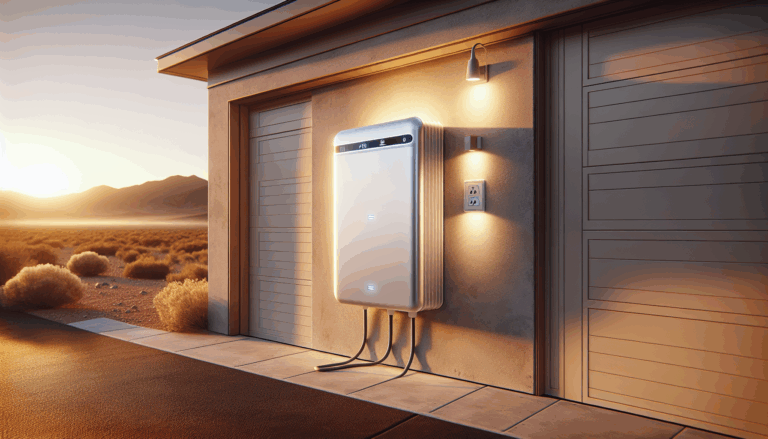
Tesla has refined the packaging and mounting system to be more compact and installer-friendly. The new units are easier to mount on walls or floors and designed to be simple to stack and wire. If you’re replacing an older battery or retrofitting a solar array, this can reduce site disruption and installation time.
Safety and chemistry updates
Tesla has been progressively shifting toward safer cell chemistries in certain energy products. The Powerwall 3 benefits from updated cell and pack-level protections. This results in better safety characteristics and may use more robust fire-mitigation techniques at the pack level.
Cost per usable kWh: improving economics
While upfront pricing can change with market conditions, the Powerwall 3 is aimed at reducing cost per usable kWh through higher power density, packing more capability into fewer units and lowering installation costs through simplified architecture. Over time, that improves the value proposition for homeowners trying to shift loads, reduce demand charges, or ensure long-duration backup.
Side-by-side comparison table (features and high-level specs)
Below is a comparison that focuses on the practical differences that most homeowners care about. Where Tesla’s official specs are clear, those are shown; where official details are limited for the latest model, you’ll see qualitative summaries to help you understand the impact.
| Feature / Model | Powerwall 1 | Powerwall 2 | Powerwall+ / Upgrades | Powerwall 3 (what’s new) |
|---|---|---|---|---|
| Usable energy capacity (typical) | ~6.4 kWh | 13.5 kWh | Similar to PW2 (var. by model) | Higher usable capacity per unit than PW2 (more power density) |
| Continuous power output (typical) | Lower (legacy) | ~5 kW AC | Higher than PW2 for short bursts | Increased continuous and peak power vs PW2 |
| Inverter integration | Varies, often separate | Integrated inverter | More powerful inverter for solar + EV | Simplified, higher-capacity inverter architecture |
| Cell chemistry | Early lithium-ion types | Lithium-ion (NMC common) | Varies, improvements | Improved chemistry and pack-level safety |
| Thermal management | Basic | Improved | Improved | Enhanced for hot climates (better longevity) |
| Form factor | Larger, heavier | Wall-mounted, stackable | Similar, some upgrades | More compact, installer-friendly |
| Installation complexity | Higher | Lower | Moderate | Lower (simpler wiring & commissioning) |
| Software & app features | Basic monitoring | Full Tesla app integration | More EV/smart features | Newer software features & grid services readiness |
| Use cases | Backup, limited shifting | Whole-home backup, time-shift | Higher-power homes & EVs | Better whole-home backup, EV charging optimization |
| Typical availability | Legacy | Widely available | Select markets/models | Rolling availability; targeted improvements |
| Ideal for | Small backup needs | Most residential systems | Larger homes/EV owners | Homes needing higher power density & better integration |
Note: Some exact numerical specs for Powerwall 3 were not fully published in all markets at the same time. If precise numbers matter for your purchase decision (e.g., exact kW or kWh values), ask Nevada Solar Group or Tesla for the latest tear sheet and configuration options for your home.
Why these changes matter for homeowners and businesses in Nevada
Nevada has high summer temperatures, growing EV adoption, and a sunny climate that favors rooftop solar. The Powerwall 3’s improvements are particularly relevant to you if you live in Nevada because:
- Better thermal management means less degradation in hot climates, maximizing lifetime performance.
- Higher continuous power helps you sustain HVAC loads during outages—critical during Nevada’s hot months.
- Simpler installation can reduce permitting friction and labor time, accelerating activation.
- Smart software and grid integration can help you get more value if you have time-of-use billing or are interested in utility programs.
- Pairing with EV charging means you can use stored solar energy to charge your electric vehicle at lower cost or during outages.
If your home has a large central air conditioner, an EV charger, or you simply want longer uninterrupted backup, the Powerwall 3 is designed to make those scenarios more feasible with fewer units.
Sizing the system: what you should consider
Sizing a battery system is part science and part lifestyle planning. Answering these questions will help you and your installer choose the right Powerwall arrangement.
- What are your goals? (full backup, partial backup, time-of-use arbitrage, EV charging)
- Which essential circuits do you want supported during an outage? (HVAC, refrigeration, lights, security, well pump)
- How long do you want to ride through an outage? (hours vs days)
- Do you plan to expand solar capacity or add EV charging in the future?
- What is the peak load your home draws when everything you want to run is on?
For whole-home backup with high-A/C loads, you may need multiple batteries in parallel. For partial backup or daily shifting to reduce electric bills, one or two units may be sufficient. Nevada Solar Group can perform a load analysis to create a tailored system plan that matches your priorities.
How Powerwall 3 pairs with solar systems
A battery is most effective when paired with solar. Here’s how Powerwall 3 improves the solar + storage dynamics you care about:
- More efficient charging from PV: Improved inverter and charge handling reduces losses, so more of your rooftop production ends up usable storage.
- Better peak shaving: Higher power output helps shave peaks without needing as many units, which can reduce your electric bills if you face demand charges.
- Seamless EV charging integration: You can schedule EV charging to use stored solar rather than grid energy if that’s your priority.
- Time-of-use optimization: Updated software helps you charge when PV production is high and discharge during high-rate periods.
If you’re in Las Vegas or elsewhere in Nevada, pairing Powerwall 3 with a well-designed solar array can maximize self-consumption and increase resilience during grid events.
Installation considerations and permitting in Nevada
When you’re planning installation, there are several local considerations to keep in mind.
Permitting and inspections
Local jurisdictions in Nevada have specific electrical and building permit requirements for battery installations. Nevada Solar Group has experience navigating Las Vegas permitting and inspections, which can streamline the process for you.
Location and mounting
You need to choose a location with adequate ventilation and access for maintenance. Powerwall 3’s improved form factor means more mounting flexibility—wall or floor—so you can often find a location that balances convenience and code compliance.
Interconnection and utility rules
Net metering, export limits, and utility interconnection agreements vary. Nevada Solar Group can help you handle the paperwork and ensure your system meets NV Energy or local utility requirements.
Fire code and safety inspections
Battery installations must meet fire code and safety regulations. Tesla’s design and modern battery chemistries include safety features; your installer will follow local requirements and coordinate inspections.
Cost, incentives, and economics in Nevada
Calculating the economics of a battery system depends on multiple variables: battery cost, federal and state incentives, electricity prices, and your usage patterns.
- Federal incentives: The Inflation Reduction Act expanded clean energy incentives; certain battery systems installed with solar may qualify for tax credits. Check current federal tax credit eligibility.
- State and local incentives: Nevada may offer incentives, rebates, or favorable net metering policies at different times. Nevada Solar Group can help you identify current programs and filing requirements.
- Payback and ROI: Batteries often deliver the most value when paired with time-of-use rates, frequent outages, or when avoiding demand charges. For many homeowners in Nevada, the combination of solar and a Powerwall can increase self-consumption and improve resilience, with payback varying by system size, incentives, and electric rates.
A site-specific quote from Nevada Solar Group will include estimated savings, available incentives, and financing options so you can see your projected economics.
Why choose Nevada Solar Group for a Powerwall 3 or retrofit?
You want an experienced local partner when adding energy storage. Nevada Solar Group highlights that matter to you:
- Local expertise: They’re a Las Vegas-based team familiar with Nevada’s permitting, climate, and utility rules. That local knowledge speeds installations and reduces surprises.
- Tesla experience: The company is a licensed installer of Tesla Powerwall 1 and 2, and they’re well-positioned to support Powerwall 3 installations as availability expands. Their experience with legacy systems helps when retrofitting older installations.
- Full-service offerings: Nevada Solar Group handles solar system design, permitting, roofing and shingles, EV charger installation, and energy monitoring—so your battery and solar work seamlessly together.
- Warranty and support: They emphasize workmanship and customer service, helping you navigate manufacturer warranties and local service needs.
- Partnerships and product breadth: Because they work with multiple solar panel manufacturers and battery solutions, they can help you select the best configuration for performance and budget.
If you want help sizing, permitting, or financing a Powerwall 3 installation, contacting a local expert like Nevada Solar Group will help you get a realistic timeline and cost estimate.
Use cases and practical scenarios
Understanding common homeowner scenarios helps you decide if Powerwall 3 is right for your home.
Whole-home backup during long outages
If you want to run HVAC, refrigeration, lighting, and security systems for hours or days, Powerwall 3’s higher power output per unit reduces the number of batteries needed to achieve whole-home backup. That can mean less space used and lower total installation labor.
Partial backup of critical circuits
If you only need to keep essentials running (refrigerator, lights, a few outlets), you can size a smaller system. Powerwall 3’s efficiency still gives you longer runtime for the same storage capacity.
Daily time-of-use savings
If your utility uses time-of-use rates, Powerwall 3’s software can charge during low-price periods or from solar production and discharge during high-rate windows to reduce your electric bill.
EV charging optimization
If you own or plan to own an EV, Powerwall 3 can prioritize stored solar or off-peak grid energy for charging, reducing the incremental cost of powering your vehicle.
Demand charge reduction for small commercial sites
If you run a small business, improved power handling and faster response of Powerwall 3 can help reduce peak demand spikes and associated charges.
Common questions you might have
Will my Powerwall 2 be compatible with Powerwall 3 if I add one later?
Tesla typically designs compatibility into their ecosystem, but mixed generations in a parallel installation can have limitations. Nevada Solar Group can assess whether it’s better to add the same generation or create a hybrid system while managing performance and control settings.
How many Powerwall 3 units will I need?
It depends on your goals. For whole-home backup of a typical Nevada home with central AC, multiple units may be required. For partial backup or load shifting, one to two units may suffice. A professional load analysis will give you a precise number.
How does a battery warranty work?
Tesla and other battery manufacturers provide product warranties that cover capacity retention and defects for a set number of years or cycles. Installer warranties for workmanship are separate and important—Nevada Solar Group will detail both types of coverage during your quote.
How long does installation take?
Installation timelines vary with permitting and site complexity. With simplified architecture and a local installer experienced in Tesla products, installations can often be completed in a day or two on-site, but total project time includes permitting and utility approval.
Questions to ask your installer (and why they matter)
When you talk with Nevada Solar Group or another installer, ask these questions so you make an informed decision:
- What sizing analysis will you perform to recommend the number of batteries?
- Can you provide references for recent Tesla battery installations?
- How will the system be monitored and updated over time?
- What permitting and utility interconnection steps will you handle for me?
- How do warranties work across manufacturer and installer coverage?
- What are the expected timeline and milestones from contract to activation?
These questions help you verify competence, timelines, and who is responsible for each step of the process.
Practical decision flow: Should you choose Powerwall 3 over older models?
- If you’re installing a new system now and want the latest in power, efficiency, and installation simplicity, Powerwall 3 is a compelling option.
- If you already have a Powerwall 2 and it meets your needs for capacity and backup, you might decide to wait until your unit is due for replacement or add a Powerwall 3 only if you need higher power density.
- If you’re adding battery storage primarily for time-of-use savings and your loads are moderate, a Powerwall 2 or Powerwall+ might still offer good value depending on price and availability.
- Talk to Nevada Solar Group to run a site-specific comparison and cost-benefit analysis, including incentives and expected lifetime savings.
How the Tesla app and energy management improvements affect you
The Tesla app has been central to the Powerwall experience. With Powerwall 3, expect improved scheduling, clearer solar + battery performance dashboards, and smarter controls for EV charging and backup preferences. That means you’ll be able to prioritize priorities—like keeping critical loads on or using battery power for EV charging—directly from your phone.
Maintenance, monitoring, and long-term ownership
Batteries are largely maintenance-free, but some things matter for long-term performance:
- Keep firmware up to date (Tesla often provides remote updates).
- Monitor performance via the app to catch anomalies early.
- Confirm warranty terms and how service calls are handled.
- Ensure your installer provides local support or rapid response in case of issues.
Nevada Solar Group’s local presence helps cut down response time and provides a single point of contact for both solar panels and battery concerns.
Final thoughts and next steps
If reliable backup, efficient EV charging, and smarter use of your rooftop solar matter to you, Powerwall 3 represents a meaningful step forward in Tesla’s home battery line. The improvements in power, integration, thermal handling, and software can reduce the number of units you need, simplify installation, and improve lifetime value—especially in a hot-summer market like Nevada.
To move forward:
- Get a site assessment and load analysis from a qualified installer such as Nevada Solar Group.
- Review expected savings and available incentives to understand the economics for your home.
- Compare quotes and ask about timelines, permitting, and warranty coverages.
- Decide whether to retrofit an existing system or install a new solar + battery package tailored to your needs.
If you want help with the first step—sizing a system, reviewing incentives, and getting an installer-backed quote—Nevada Solar Group can work with you locally to create an optimized plan that fits the Nevada climate, your power needs, and your budget. Nevada Solar Group 5145 S Arville St, Las Vegas, NV 89118 Phone: 702-899-5577 Email: info@nevadasolargroup.com Website: https://nevadasolargroup.com
Business Hours: Monday – Friday: 8:00 AM – 5:00 PM Closed Saturday and Sunday