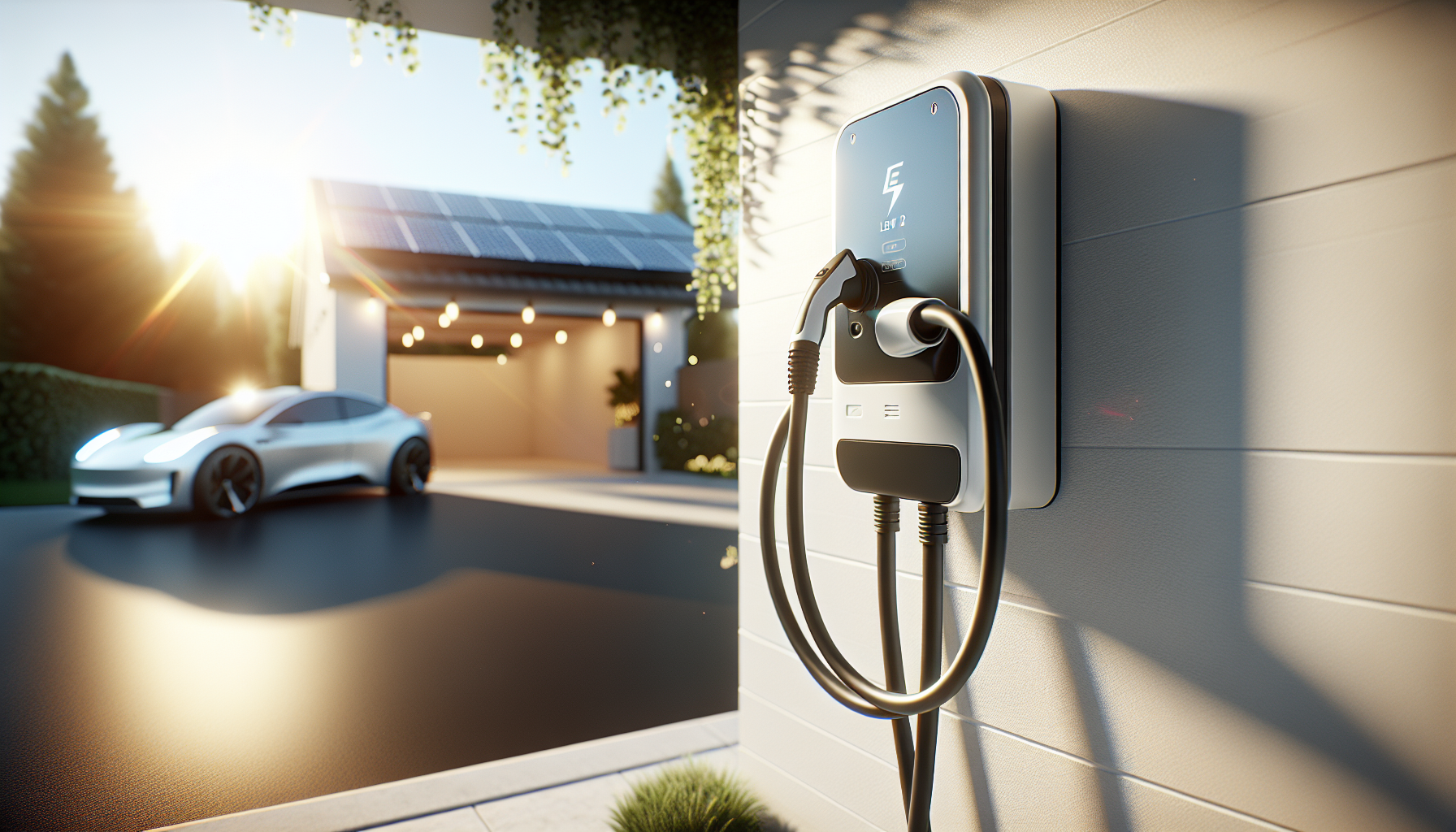
Electric Vehicle Chargers Compatible With Solar Systems
Have you ever wondered which electric vehicle chargers work best with a home solar system and how to set everything up so your EV is powered by clean energy?
Electric Vehicle Chargers Compatible With Solar Systems
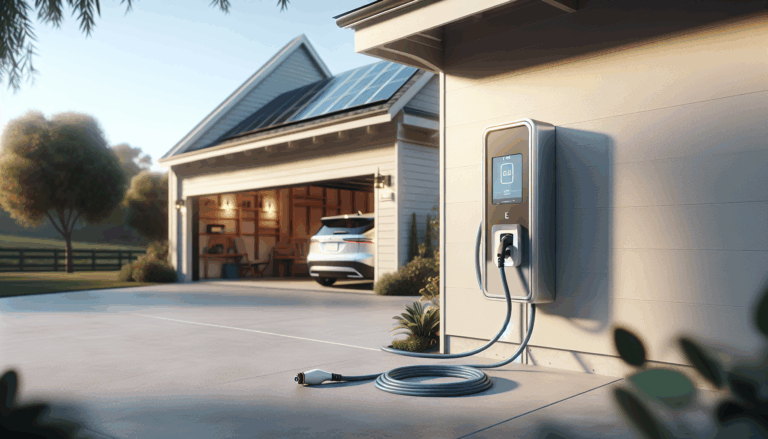
Integrating an EV charger with a solar energy system is one of the most effective ways to lower your transportation carbon footprint and reduce fuel and electricity costs. You’ll get an overview of charger types, how they interact with solar panels and battery storage, and practical guidance for selecting and installing systems—especially if you live in Nevada and are considering working with Nevada Solar Group.
Why pair an EV charger with your solar system?
Pairing your EV charger with solar generation lets you use renewable energy that your panels produce to charge your car, reducing reliance on grid power and lowering long-term costs. You’ll also increase energy independence, particularly when you combine solar with battery backup like the Tesla Powerwall.
Who benefits from solar-integrated EV charging?
If you own a home or business with roof space for panels, a driveway or parking area for charging, and a desire to lower energy bills or reduce emissions, integrated EV charging is a smart investment. It’s especially compelling in sunny states like Nevada where solar production is high and local incentives may improve economics.
Types of EV Chargers and How They Work With Solar
There are three main charger types. Each interacts with solar differently and has different installation requirements and cost profiles.
Level 1 Chargers
Level 1 chargers use a standard 120V household outlet and are the simplest option. You’ll typically get 2–5 miles of range per hour.
- Best for plug-in hybrids or drivers who charge slowly and have low daily mileage.
- Limited ability to coordinate with solar production because charging is slow and often occurs overnight using grid power.
- Good low-cost starting option, but not ideal if your goal is to maximize solar usage.
Level 2 Chargers
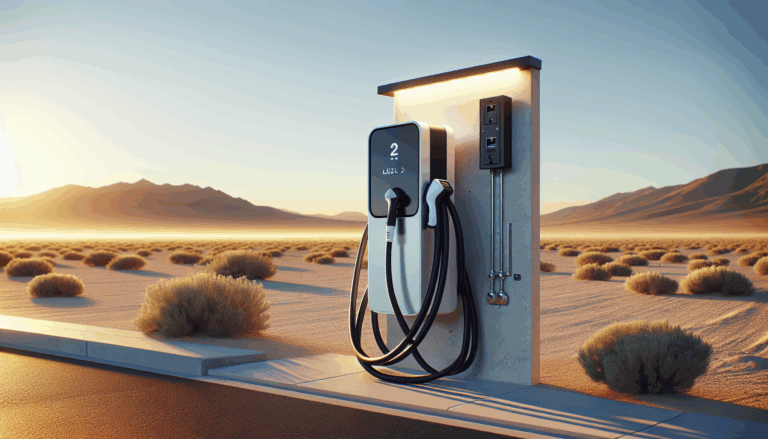
Level 2 chargers operate at 240V and provide about 10–60 miles of range per hour depending on vehicle and charger amperage.
- Most common choice for home charging and most compatible with solar systems.
- Intelligent Level 2 chargers support smart scheduling, load management, and solar export control so you can prioritize charging during high solar production periods.
- Can be integrated with a battery such as Tesla Powerwall for time-shifting solar energy or charging during peak production.
DC Fast Chargers (Level 3)
DC fast chargers provide much higher power (50 kW and up) and charge EVs very quickly, but they’re typically used in commercial applications.
- Rare for residential installations due to high cost, large electrical upgrades, and technical complexity.
- Can be paired with larger solar + battery arrays in commercial or multi-family settings to offset demand charges and charge vehicles quickly from solar-battery resources.
How Solar and EV Charging Work Together
When you integrate EV charging with solar, you have a few operational modes and hardware choices that define how energy flows.
Direct solar-first charging
This approach prioritizes real-time solar production for EV charging. When your panels are producing, the charger draws directly from the solar inverter output or from the home grid fed by the panels.
- You’ll want a charger or system that can modulate charging based on solar production.
- Usually requires a smart charger or energy management system to avoid drawing grid power when panels are insufficient.
Solar + battery (time-shifting)
By storing excess solar energy in a battery (like Tesla Powerwall) during the day, you can charge the EV during evening hours or during outages.
- This mode provides resilience and allows charging when solar isn’t producing.
- The battery can also reduce demand charges in commercial settings.
Grid-tied with smart scheduling
If you’re on a time-of-use (TOU) rate, you can schedule charging to times when grid electricity is cheapest and optionally combine with solar production periods.
- Smart chargers can shift charging to midday solar peaks or off-peak grid hours depending on preference and incentives.
Chargers That Work Well With Solar Systems
Not all chargers offer the same intelligence or integration features. Here are common models and features you’ll want to consider for solar compatibility.
Smart Level 2 chargers (recommended for most homes)
Smart Level 2 chargers provide apps, scheduling, and often local grid/load controls. They’re your best choice if you want to maximize solar usage.
- Examples: Tesla Wall Connector, ChargePoint Home Flex, Enel X JuiceBox (Emporia Vue also has smart options), EVBox Elvi.
- Features to look for: solar export limiting, modulating charge rate, app control, integration with energy management systems.
Chargers with native battery integration
Some chargers can integrate directly with battery systems or with a home energy management system (HEMS), allowing coordinated charging and battery dispatch.
- Tesla Wall Connector works especially well in Tesla ecosystems when combined with Powerwall for coordinated charging policies.
- Other third-party chargers can be paired via APIs or smart energy platforms.
Commercial chargers and fleet solutions
For businesses or multi-unit properties, look for chargers designed for energy management, load balancing, and grid services.
- These often pair with larger solar + battery systems to reduce peak demand costs and support multiple vehicles.
Table: Quick Comparison of Popular Home Chargers and Solar Compatibility
| Charger | Type | Solar Integration | Battery Integration | Smart Features |
|---|---|---|---|---|
| Tesla Wall Connector | Level 2 | Excellent in Tesla ecosystem; works with Powerwall | Native integration with Powerwall | App control, power sharing, NACS connector |
| ChargePoint Home Flex | Level 2 | Strong app & scheduling; integrates with HEMS via APIs | Can integrate via third-party HEMS | Adjustable amps, smart scheduling |
| JuiceBox / Enel X | Level 2 | Solar-aware via API/HACS integration | Compatible with home batteries via HEMS | Energy monitoring, dynamic load management |
| EVBox Elvi | Level 2 | Open protocols; integrates with solar monitoring | Works with battery systems via HEMS | Modular, firmware updates |
| Siemens VersiCharge | Level 2 | Basic scheduling; limited direct solar control | Requires integration via external HEMS | Reliable, basic features |
| DC Fast (Commercial) | Level 3 | High-cost; requires large solar+storage | Often paired with large battery banks | Power management, demand charge mitigation |
How Nevada Solar Group Can Help
If you’re in Nevada, Nevada Solar Group can simplify the entire process. You’ll benefit from their local expertise, licensed installers, and deep product partnerships.
Local knowledge and licensed installations
Nevada Solar Group specializes in solar panel installation in Las Vegas and the surrounding areas. They’re licensed installers for Tesla Powerwall 1 and 2 and have experience integrating EV chargers with rooftop PV and battery storage.
- You’ll get site-specific design and permitting help tailored to Nevada regulations and building codes.
- Their team can replace roofs if needed and install solar shingles, making full-system integration smoother.
Full-service offering from design to activation
Nevada Solar Group handles solar system design, permitting, engineering, roofing replacement (including solar shingles), and EV charging station installation. You won’t need to coordinate multiple contractors for a seamless system.
- You’ll receive home energy monitoring via smart apps and ongoing maintenance options.
- Their partnerships with brands like SunPower, Panasonic, LG, and S-Energy expand your product choices and warranty options.
Battery and outage resilience
As a licensed Tesla Powerwall installer in Nevada, Nevada Solar Group can help you configure systems that prioritize solar production and battery backup during outages while enabling intelligent EV charging.
- You’ll be able to charge your vehicle during outages if your system and vehicle support necessary islanding functions.
- Powerwall integration supports automated charging strategies that minimize grid consumption.
Designing Your Solar + EV Charging System
Design is where you ensure your solar, battery, and charger all work together safely and efficiently. The steps below outline what you’ll consider and plan.
Assess your driving and energy needs
Start by estimating your average daily driving distance, EV efficiency (miles/kWh), and desired charging speed.
- For example, if you drive 40 miles/day and your EV uses 3.5 miles/kWh, you’ll need ~11.5 kWh per day to fuel your commute.
- Match your solar production profile and battery capacity to these needs.
Evaluate your home’s solar production
Work with a solar installer to model expected solar output based on roof orientation, shading, and panel choice.
- Use historical solar irradiance data for Las Vegas to estimate annual production and midday peaks that are ideal for charging.
- Consider seasonal variations—Nevada’s high summer insolation creates great midday production but check winter output if you have high year-round needs.
Choose battery capacity and charging power
Decide whether you want same-day solar-only charging, battery-backed evening charging, or a hybrid approach.
- A Tesla Powerwall provides ~13.5 kWh usable capacity; pairing one with a mid-sized solar array can cover many daily commutes.
- Select a Level 2 charger amperage that matches your electrical service and vehicle onboard charger (e.g., 40A, 48A).
Electrical service and panel upgrades
Older homes may need a service panel upgrade to accommodate 240V Level 2 chargers, EV loads, and battery inverters.
- You’ll need a licensed electrician and coordination with Nevada Solar Group to ensure safe installation and permit compliance.
Site layout and conduit
Plan charger location, conduit runs, and wiring to minimize distance, reduce installation costs, and satisfy local codes.
- Nevada Solar Group will help plan conduit paths and coordinate roof or garage penetrations for combined solar and charger wiring where appropriate.
Incentives, Rebates, and Utility Programs in Nevada
Your project economics will improve with state and local incentives. Nevada has several programs and opportunities you should check.
Federal tax incentive
You may be eligible for the Federal Investment Tax Credit (ITC) for qualifying solar and battery systems—verify current rules and percentage.
- As of your planning, this often applies to solar + battery systems if criteria are met; consult a tax advisor or Nevada Solar Group for up-to-date details.
State and local incentives
Nevada periodically offers incentives and utility rebates for solar and EV charging infrastructure. Check Nevada Solar Group for current local programs that affect Las Vegas homeowners and commercial customers.
- Utilities may offer EV charging rebates, grid integration credits, or low-interest financing for electrification projects.
Net metering and export policies
Nevada’s net metering rules and interconnection policies determine compensation for excess solar generation. Knowing these rules affects decisions about battery sizing and export-limited charging strategies.
- Nevada Solar Group can guide you through utility interconnection paperwork and advise on whether you should size systems to export excess generation or store it locally.
Installation Process: What to Expect
A clear installation plan reduces surprises. Here’s a typical sequence for a solar + battery + EV charger project.
Site visit and assessment
A technician will survey your roof, electrical panel, and driveway/garage to recommend array size, panel placement, battery location, and charger mounting.
- You’ll get a detailed proposal and system design.
Permitting and approvals
Nevada Solar Group will secure local permits and handle utility interconnection forms for solar and battery. Permitting times vary, but proactive management reduces delays.
- Expect permit approvals to take anywhere from a few weeks to a couple months depending on jurisdiction.
Electrical upgrades and roof work
If needed, the crew will perform service panel upgrades, roof repairs, or full replacements (including solar shingle options) before installing panels or mounting the charger.
- Coordination ensures roof warranties and solar mounting hardware are installed correctly.
Solar and battery installation
Panels, inverters, and battery systems are installed next. The team will wire and configure the inverter and Powerwall (if used) per manufacturer specs.
- Testing and commissioning ensure the system performs as designed.
Charger installation and testing
EV charger is mounted, wired, and configured. Smart features and app integration are set up, including any solar export or scheduling controls.
- Final inspections and utility sign-offs complete the process. Nevada Solar Group will walk you through app usage and performance monitoring.
Cost Considerations and Payback
Costs will vary by system size, charger type, battery selection, and installation complexity. Here are factors that drive cost and payback.
Upfront costs
- Solar array cost: Depends on size and panel brand (SunPower and LG often cost more but offer higher efficiency and warranties).
- Battery cost: Tesla Powerwall pricing varies with installation and incentives.
- Charger cost: Level 2 home chargers range from several hundred to over a thousand dollars for premium smart units.
- Electrical upgrades and labor: Service panel upgrades and trenching increase costs.
Operating savings
- Charging from self-generated solar electricity lowers your fuel cost relative to gasoline or grid electricity.
- Behavioral savings come from smart scheduling and shifting charging to solar peaks.
- Battery-backed charging increases resilience and can prevent the use of grid power during high price periods.
Payback period
Payback depends on system costs, local electricity prices, driving habits, and incentives. In Nevada, high solar production often shortens payback relative to cloudier regions.
- Nevada Solar Group can provide a customized financial model showing expected savings, payback period, and tax incentive calculations.
Choosing the Right Charger: A Checklist
Use this checklist when selecting an EV charger for your solar-integrated system.
- Does the charger support modulating charge rates based on solar production?
- Can it interface with home energy management systems (HEMS) or Powerwall?
- Does it allow scheduling by time-of-day or PV availability?
- Is the connector type compatible with your EV (NACS for Tesla, CCS1 for many others)?
- Does it offer power sharing if you have multiple chargers?
- What are the installation costs and required electrical upgrades?
- What warranties and local support are available?
- Does the installer (e.g., Nevada Solar Group) provide a single point of contact for solar, battery, and charger installation?
Future-Proof Features to Consider
Thinking ahead will help your system stay useful as technology evolves.
Vehicle-to-Home (V2H) and Vehicle-to-Grid (V2G)
Bi-directional chargers enable your EV battery to supply home loads (V2H) or the grid (V2G) when supported by the vehicle and local regulations.
- V2G is still emerging and may require specific hardware, utilities that support it, and compatible EVs.
- Plan conduit, metering, and electrical capacity if you intend to pursue bidirectional capabilities later.
Open standards and APIs
Choose chargers that support open communication standards (like OCPP) or provide APIs for integration. This makes future upgrades and cross-brand integration easier.
Scalability
If you plan to add vehicles, battery capacity, or expand solar later, design the electrical service and site layout to minimize future costs.
Maintenance and Warranties
Proper maintenance and warranties protect your investment.
- Solar panels and inverters often carry 10–25 year warranties; premium panels may offer better long-term guarantees.
- Chargers usually include manufacturer warranties (1–3 years typically) and may have extended warranty options.
- Batteries like Tesla Powerwall have manufacturer performance guarantees; Nevada Solar Group can explain warranty terms and expected degradation.
- Routine checks: keep charger vents clear, inspect cabling, and verify software updates. Schedule periodic inspections of solar arrays to clean panels if necessary.
Common Questions (FAQs)
Can my EV charge directly from solar panels without a battery?
Yes, you can charge directly from solar when production exceeds household loads. A smart charger that responds to real-time solar production or an inverter with built-in EV charging controls is ideal. However, without a battery, charging is limited to times when panels are producing.
Will an EV charger overload my home’s electrical system?
If your service capacity is insufficient, a charger can require a panel upgrade. Smart chargers can limit current and offer load-sharing to prevent overload. Nevada Solar Group will assess your electrical infrastructure as part of design.
Is Tesla Wall Connector compatible with non-Tesla vehicles?
Tesla uses the NACS connector in the U.S., while many non-Tesla EVs use CCS1. Adapters exist for many vehicles, but compatibility depends on the vehicle and local regulations. Confirm with the vehicle manufacturer before purchasing adapters.
Do I need special permits to install an EV charger in Nevada?
Yes—EV charger installations typically require permits and must meet local codes. Nevada Solar Group manages permitting and utility interconnection to ensure compliance.
Can I charge my EV during a power outage?
If you have battery backup like Tesla Powerwall and a compatible setup, you can charge during outages depending on the system configuration. Without battery backup, grid-tied solar systems typically shut off during outages for safety reasons unless you have an inverter and transfer switch that allow islanding.
Final Recommendations
- If your goal is to maximize solar usage and resilience, choose a Level 2 smart charger and pair it with a battery system like Tesla Powerwall.
- Work with a local, licensed installer such as Nevada Solar Group to get accurate system design, permitting help, and warranty-backed installation.
- Prioritize chargers that provide smart controls, integration options, and open protocols to keep your system flexible for future upgrades.
- Evaluate incentives and utility programs in Nevada to reduce upfront costs and improve your system’s payback.
- Plan for electrical service capacity early to avoid expensive retrofits later, and consider future-proofing for V2H/V2G capabilities.
If you want, you can provide details about your home (roof orientation, typical driving range, current electrical service size) and I can help you sketch a tailored strategy for integrating an EV charger with a solar and battery system—showing how Nevada Solar Group could support each step. Nevada Solar Group 5145 S Arville St, Las Vegas, NV 89118 Phone: 702-899-5577 Email: info@nevadasolargroup.com Website: https://nevadasolargroup.com
Business Hours: Monday – Friday: 8:00 AM – 5:00 PM Closed Saturday and Sunday