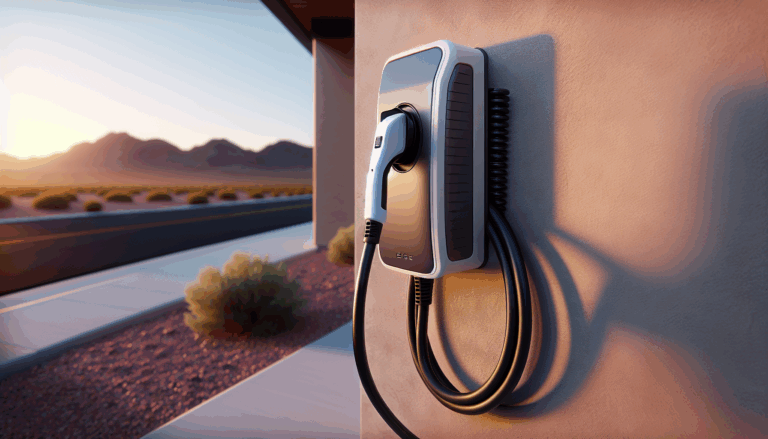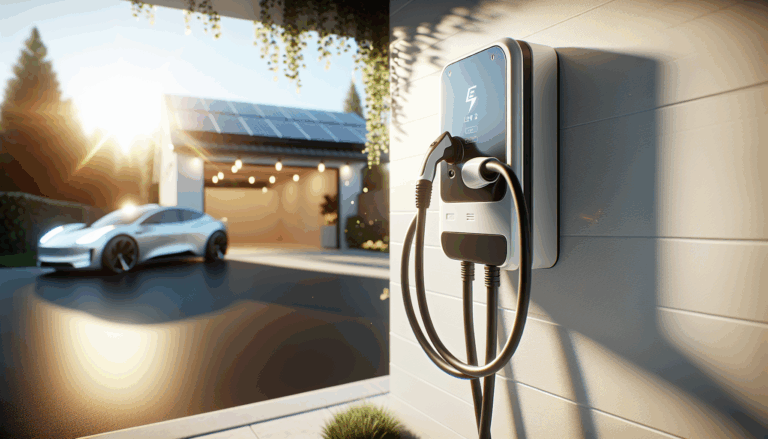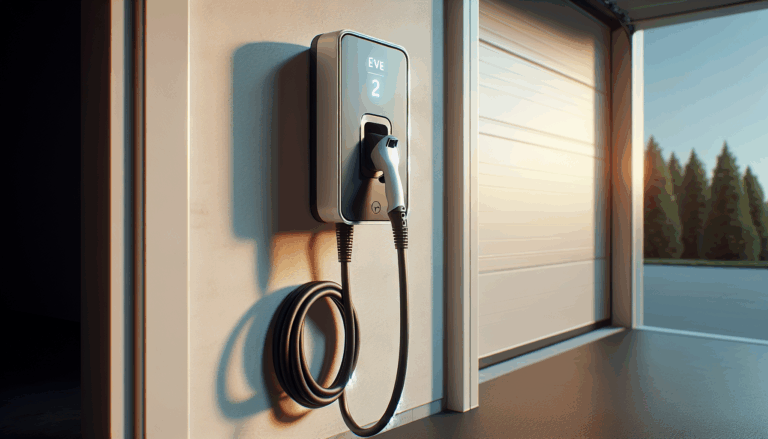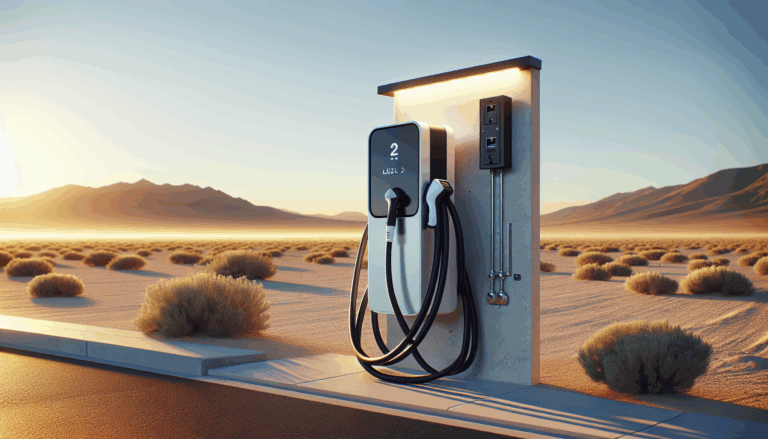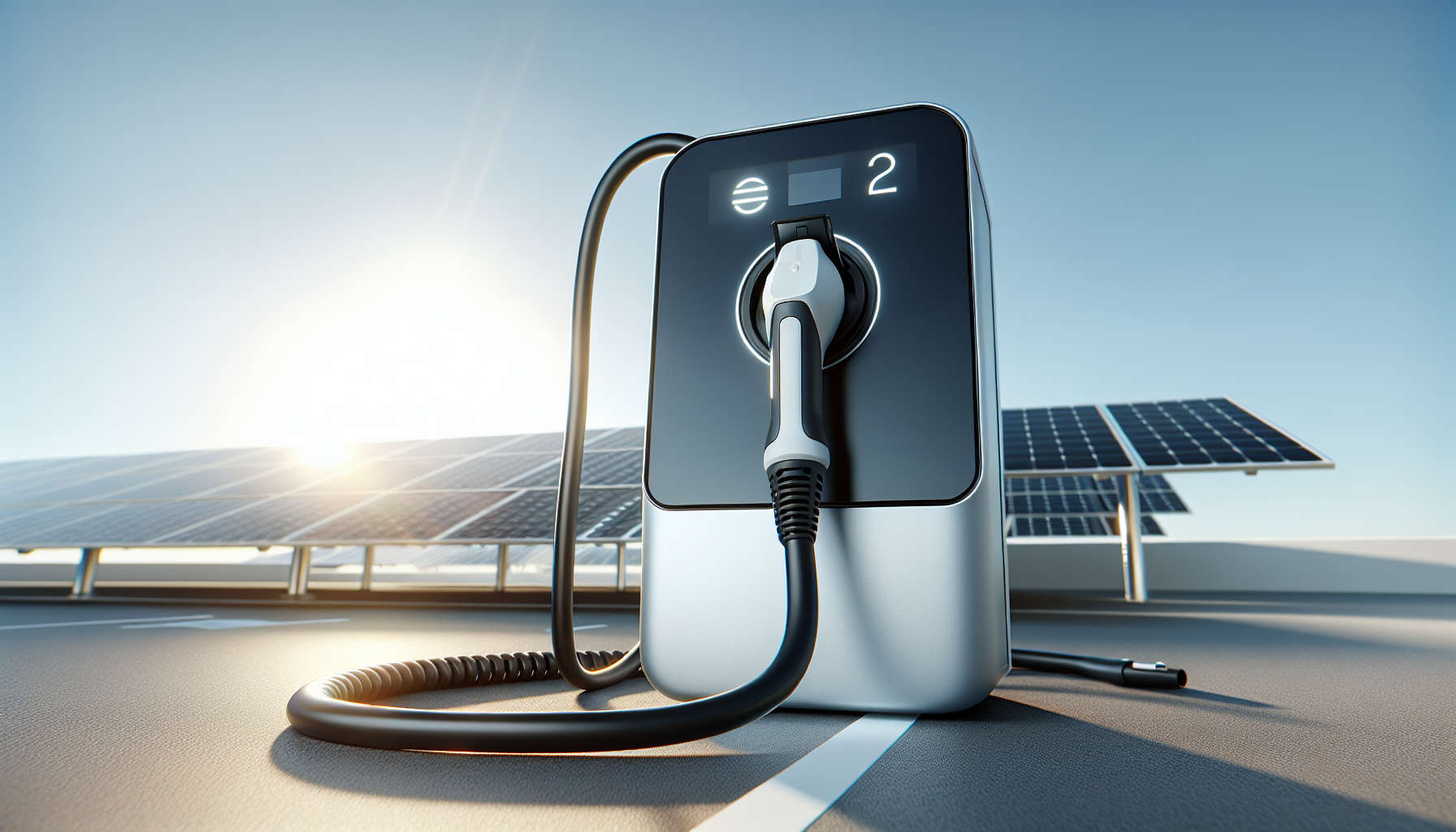
Electric Vehicle Chargers Compatible With Solar Systems
? Are you thinking about charging your electric vehicle with the clean, cost-effective power your solar panels generate, and wondering which EV chargers will work best with your system?
Electric Vehicle Chargers Compatible With Solar Systems
You want an EV charger that not only refuels your vehicle but also plays nicely with your solar panels, your battery backup, and your utility rules. This article explains how chargers work with solar, what features to look for, which products are commonly chosen, and how to plan an installation in Nevada with a local expert like Nevada Solar Group.
Why pair EV charging with solar?
When you charge your vehicle using solar energy, you reduce the amount of electricity you buy from the grid and lower your charging costs. You also increase the environmental value of driving electric by using renewable energy generated at your home or business.
Pairing EV charging with solar can help you shift charging to midday when production is highest, reduce peak demand charges for commercial properties, and take advantage of battery storage to charge at night using solar energy stored during the day. These benefits depend on the charger features and how your solar and battery systems are configured.
Types of EV chargers and how they relate to solar
You need to understand the basic charger classes because integration options and electrical requirements vary. Each type of charger has different power levels and plays a different role in how you manage solar energy for charging.
Level 1 chargers
Level 1 chargers plug into a standard 120V household outlet and provide slow charging, usually 2–5 miles of range per hour. These are simple to use with solar but typically don’t make the best use of midday solar production because the charging rate is low and often happens overnight.
Level 2 chargers
Level 2 chargers use a 240V circuit and deliver much faster charging, typically 10–60 miles of range per hour depending on vehicle and charger power. Level 2 is the most common choice for home and workplace charging and supports smart features (scheduling, load management, solar-aware charging) that let you align charging with solar production.
DC fast chargers
DC fast chargers are high-power units used primarily for public or commercial fast charging and are usually not a home solution. They require significant infrastructure and are typically paired with large solar and battery systems if you want to offset charging with on-site renewable energy.
How solar systems interact with EV chargers
Understanding the relationship between your solar array, inverter, battery storage, and EV charger is key to a useful installation. There are different design philosophies—solar-first, grid-first, and battery-assisted approaches—that change how a charger is used.
Solar-first systems prioritize charging your EV directly from solar generation when it’s available. Grid-first systems draw from the utility and may only use solar when it is convenient or through manual control. Battery-assisted systems use batteries (like Tesla Powerwall) to smooth charging, enabling you to store solar energy midday and use it to charge your vehicle later in the evening or during an outage.
Export limiting and grid rules
Many utilities and local codes limit how much power you can export to the grid. Export limiting (also called export control) prevents sending excess solar generation to the grid beyond permitted levels. Export limiting matters because it affects how much solar energy is available for onsite use, including charging an EV.
You can manage export limits either through inverter settings, a dedicated export controller, or by using a smart charger that reduces charging rate when export thresholds are reached. Making sure your site complies with utility interconnection rules is a crucial part of planning.
Power sharing between solar, battery, and EV charger
Power-sharing strategies let multiple systems draw from the same solar and battery resources without overloading your main service. For example, intelligent systems can reduce water heater load or household loads when your EV needs more power, or they can temporarily slow EV charging to prioritize home backup during outages.
Some inverter/charger ecosystems support automatic power-sharing and prioritization. Your installer will design settings so that your EV charging is both efficient and compliant with safety and utility requirements.
Charger features that matter for solar compatibility
Not all EV chargers are created equal when it comes to solar integration. Certain features make a charger more suitable for pairing with PV systems and battery storage.
Solar-aware charging and scheduling
Solar-aware chargers can schedule or throttle charging to match solar production windows. This capability ensures your car takes advantage of free, clean solar power whenever it’s available, and charges from stored energy during the evening if you have battery backup.
Scheduling features also allow you to target off-peak electricity rates if you prefer to charge from the grid at cheaper times. Combining solar-aware charging and schedule-based charging gives you maximum flexibility.
Dynamic load balancing and circuit-level management
Dynamic load balancing (or load management) prevents overloads by sharing available power among multiple circuits and EV chargers. If you have an ADU, multiple EVs, or high household loads, this feature is critical to avoid costly electrical upgrades while still using solar efficiently.
Load balancing can operate at the panel level or charger level. Panel-level systems often pair with smart breakers and energy management hardware to coordinate the whole-home load with EV charging and solar output.
Power limiting and export control
Power limiting reduces the charger output to keep your site within export limits or to reduce peak demand. Some chargers can receive signals from your inverter or home energy system to scale charging dynamically.
This is useful if your utility imposes limits or if you want to avoid exporting during grid-constrained periods while still maximizing local solar use.
Bidirectional charging (V2G / V2H)
Bidirectional charging allows a vehicle to send electricity back to the home (Vehicle-to-Home, V2H) or to the grid (Vehicle-to-Grid, V2G). This feature is still in early growth, but it offers a powerful way to use your EV as a storage asset—supplying household loads during outages or participating in energy programs.
Not all vehicles support bidirectional charging and not all chargers support it either. If this capability matters to you, confirm vehicle compatibility and charger support, and coordinate with your installer on safety and control strategies.
Communication protocols and integration
Chargers that support standard communication protocols (OCPP, Modbus, or proprietary APIs used by inverter manufacturers) are easier to integrate into a full home energy system. Integration lets your charger receive commands from the inverter, battery gateway, or home energy management system so charging can respond to solar production, battery state of charge, and utility signals.
Open protocols increase your options for future upgrades and vendor interoperability.
Popular EV chargers and their solar-friendly features
Below is a comparison of widely used home chargers and the solar-friendly features they commonly offer. This table highlights general capabilities—always verify the exact model and firmware features with the manufacturer and your installer.
| Charger / Brand | Smart Scheduling | Load Management | Solar Export Control | Bidirectional (V2H/V2G) | Notes |
|---|---|---|---|---|---|
| Tesla Wall Connector | Yes (Tesla app) | Limited when integrated with Tesla ecosystem | Works when paired with Powerwall/Gateway | No (current Wall Connector) | Excellent integration with Tesla vehicles; best paired with Powerwall for seamless solar+storage charging. Nevada Solar Group installs Powerwall 1 & 2. |
| JuiceBox (Enel X) | Yes | Yes (via app and integrations) | Yes via API integrations | Some pilot solutions | Widely used, robust app and smart controls. |
| ChargePoint Home Flex | Yes | Yes | Limited direct export control; integrates via energy management | No | Flexible power settings and strong user experience. |
| Wallbox (Pulsar, Quasar) | Yes | Yes | Emerging integrations | Wallbox Quasar supports bidirectional (limited) | Wallbox offers home chargers and a bidirectional Quasar model—confirm vehicle compatibility. |
| SolarEdge EV Charger | Yes | Integrated (with SolarEdge inverters) | Yes (through SolarEdge inverter and inverter control) | No (in most models) | Works within SolarEdge ecosystem for coordinated PV + EV charging and power sharing. |
You should treat this table as a starting point. Each manufacturer releases firmware updates and product variants that can change capabilities. Talk with your installer to match the exact product to your solar system and energy goals.
Integrating EV chargers with battery storage like Tesla Powerwall
If you have, or plan to install, home battery storage, pairing an EV charger with that storage adds flexibility and resilience. A battery lets you charge your vehicle at night from energy you stored from the sun, or it can power essential loads and optionally charge the EV during an outage.
Tesla Powerwall integration
Tesla Powerwall integrates with solar arrays and the Tesla ecosystem to provide backup, load shifting, and time-based control. When Powerwall is paired with a Tesla Wall Connector, you can prioritize charging from solar or backup storage according to the settings in the Tesla app. Nevada Solar Group is a licensed installer of Tesla Powerwall 1 and 2, and can configure Powerwall systems to work with your solar panels and EV charger for optimal performance.
Benefits of battery-assisted charging
With battery-assisted charging you can:
- Smooth solar variability by storing excess midday production.
- Charge overnight from stored solar energy to reduce utility bills if your utility imposes higher night rates.
- Provide emergency charging during outages so your EV can be part of your emergency plan.
- Participate in demand response or utility programs when available.
Your installer will size your battery and configure priorities so you get the most value out of storage for both home loads and EV charging.
Sizing solar and battery systems for EV charging
Sizing your solar array and battery storage requires understanding your driving habits, vehicle efficiency, and your home’s solar production profile. Below are calculations and sample scenarios to help you estimate what you need.
How to estimate EV energy needs
A common measure is energy per mile. Many EVs average about 3–4 miles per kWh, but check your vehicle’s real-world efficiency. Multiply your average daily driving distance by the kWh-per-mile to get daily energy needs.
Example:
- Daily commute: 30 miles round trip.
- Vehicle efficiency: 3.5 miles/kWh.
- Daily energy need = 30 / 3.5 ≈ 8.6 kWh/day.
Translate EV needs to solar array size
Solar production varies by location, array orientation, shading, and season. In Las Vegas, a well-oriented 1 kW solar system might produce ~4.5–6 kWh/day annual average depending on system losses and tilt. Use a conservative local production figure from your installer.
Example:
- Daily EV need = 8.6 kWh/day.
- If 1 kW of PV produces 5 kWh/day on average, then you’d need ≈ 8.6 / 5 = 1.72 kW of additional PV just to cover EV charging daily on average.
- Practically, homeowners often add larger arrays to offset household load as well.
Battery sizing for charging flexibility
If you want to store enough energy to charge the EV overnight, size the battery by desired stored kWh plus some margin for depth-of-discharge and reserve.
Example:
- If you want to store one full EV charge of 10 kWh for overnight charging, consider a battery of at least 12–14 kWh usable capacity to account for losses and reserves.
Sample scenarios table
| Scenario | Daily EV kWh | PV capacity (kW) needed* | Battery usable kWh recommended |
|---|---|---|---|
| Short commuter (20 miles/day) | 6–7 kWh | 1.2–1.6 kW | 8–10 kWh |
| Average commuter (40 miles/day) | 11–13 kWh | 2.2–2.8 kW | 12–20 kWh |
| Heavy user (100 miles/day) | 28–33 kWh | 5.6–6.6 kW | 20–40 kWh |
*Estimates assume ~5 kWh/day per 1 kW PV production average; local production varies.
These are ballpark figures. Nevada Solar Group can model your actual solar production in Las Vegas conditions and recommend the appropriate array and battery sizes to meet your EV charging goals.
Electrical and installation considerations
Installing an EV charger with solar requires coordination between your electrician, solar installer, and possibly utility and permitting authorities. Proper planning prevents surprises and reduces costs.
Dedicated circuit and panel capacity
Most Level 2 chargers require a dedicated 240V circuit sized for the charger’s maximum current. Verify your main service capacity—many older homes may need service upgrades to support a high-power charger in addition to a solar system and HVAC loads.
Nevada Solar Group offers full-system design services and can evaluate whether your service upgrade is necessary or if dynamic load management can avoid it.
Inverter compatibility and gateway installation
To coordinate charger behavior with solar output, you may need an inverter or gateway that supports communication with the charger. Some inverter manufacturers provide integrated solutions that allow direct control of EV charging while others rely on third-party energy management systems.
A licensed installer will ensure proper wiring, communications, and code-compliant installation of any required gateway or control hardware.
Permits and interconnection
Permitting processes for EV charger installations vary by jurisdiction. You’ll typically need an electrical permit, and if you plan to export to the grid, an interconnection agreement with the utility is necessary. Utility requirements can include export limiting or specific metering arrangements.
Nevada Solar Group manages permitting and interconnection for solar and battery systems in Las Vegas and can coordinate with your electrician to streamline the process.
Location, mounting, and convenience
Choose a charging location that’s convenient for your parking habits, protected from weather if possible, and within feasible conduit distance from your electrical panel. Consider future expansion if you expect to add a second EV or higher power charging later.
Costs, incentives, and rebates in Nevada
You’ll weigh the initial install cost against long-term savings from lower fuel costs and potential incentives. Incentives change frequently, so check current programs and consult your installer for up-to-date information.
Federal and state incentives
As of mid-2024 there is a federal Investment Tax Credit (ITC) that applies to solar and battery installations under qualifying rules. This can significantly reduce upfront costs for solar + storage systems. State and local incentives vary—some utility programs and municipal rebates occasionally help offset battery or EV charger installation costs.
Because incentive rules evolve, you should confirm current federal, state, and local programs. Nevada Solar Group will help identify eligible rebates and incentives when designing your system.
Utility programs and EV charging rebates
Some utilities offer rebates or incentives for residential EV chargers or for participating in managed charging programs that help the utility balance load. Check with your local utility for demand response programs, time-of-use rates, or EV-specific incentives.
Nevada Solar Group can help identify utility-specific programs in Nevada and incorporate them into your financial analysis.
Cost considerations for equipment and installation
Costs depend on charger type, site complexity, electrical upgrades, and whether you add battery storage. Level 2 chargers and basic installs are the most common homeowner cost. Adding smart energy management, battery storage, or a service upgrade increases cost but can improve long-term savings and resilience.
Nevada Solar Group provides full-scope project quotes that account for solar, batteries, EV charging, and any roof or electrical upgrades needed.
Choosing an installer: what to look for
A good installer makes the difference between a functional system and an efficient, safe, future-ready setup. Look for these qualifications when selecting a partner.
Licensing, certifications, and experience
Ensure the installer is licensed for electrical and solar work, and certified by key manufacturers if you want branded products. Nevada Solar Group emphasizes licensed and certified installation capabilities, and has partnerships with top manufacturers like SunPower, Panasonic, LG, S-Energy, and Tesla Powerwall.
Experience in local permitting and interconnection is particularly valuable—local knowledge speeds approvals and avoids common mistakes.
Product portfolio and warranties
Choose an installer that works with quality products and stands behind warranty claims. Panels, inverters, batteries, and chargers each come with manufacturer warranties. Nevada Solar Group highlights warranty offers and manufacturer partnerships to provide long-term peace of mind.
Customer service and process
A streamlined process from consultation through activation makes your project easier. Ask about design timelines, permitting support, installation schedule, and post-installation monitoring. Nevada Solar Group stresses customer service and streamlined processes to support a smooth transition to solar + EV charging.
Maintenance, updates, and lifecycle considerations
Once your system is installed, maintenance and firmware updates keep everything running efficiently and securely. You’ll want a plan for monitoring, upkeep, and future upgrades.
Monitoring and software updates
Many solar and EV systems include monitoring apps that let you see production, consumption, and charging behavior. Keep firmware up to date to benefit from new features and security patches. Nevada Solar Group provides home energy monitoring services and smart app integrations as part of full-system offerings.
Preventative maintenance
Solar panels require minimal maintenance, but occasional cleaning and inspections help preserve output. Chargers and batteries may need firmware updates, visual inspections, and electrical checks. Plan periodic system reviews with a qualified technician.
End-of-life and upgrades
Components age at different rates: inverters may need replacement after 10–15 years, while panels often have 25+ year performance warranties. Batteries have cycle life limits and may need replacement in 8–15 years depending on use. Plan for eventual upgrades if you want to increase capacity or add new smart features.
Future trends: bidirectional charging, smart grids, and more
The market for EV charging and home energy is evolving rapidly. Emerging trends include vehicle-to-home (V2H) and vehicle-to-grid (V2G) capabilities, smarter home energy management systems, and tighter integration between EV chargers, batteries, and inverters.
As standards mature and vehicle support grows, your EV could become a distributed energy resource that adds resilience and potential revenue streams (via utility programs) to your home. Working with an installer who understands these trends, like Nevada Solar Group, helps you prepare for a future-proof system.
Step-by-step checklist to install an EV charger with solar
This checklist helps you prepare and coordinate the project from the initial assessment to final commissioning.
- Assess driving needs and energy goals. Estimate daily kWh needed for EV charging and determine whether you want backup charging during outages.
- Site evaluation and electrical audit. Check main service capacity, panel space, conduit runs, and roof/site shading for panels.
- Design solar + battery + charger system. Determine PV size, inverter type, battery size, and charger model with solar-aware features. Nevada Solar Group offers full system design and engineering.
- Estimate costs and incentives. Review federal, state, and utility incentives and calculate ROI with your installer.
- Permitting and interconnection. File required permits and interconnection agreements with the utility. Let your installer handle most of these administrative steps.
- Installation of solar and battery (if applicable). Install PV panels, inverter, and battery system; verify production and system settings. Nevada Solar Group installs panels from top manufacturers and is a licensed Tesla Powerwall installer.
- Charger electrical work. Install charger circuit, mount charger, and configure communications and control integrations.
- Integrate and commission. Configure export limiting, scheduling, and load management. Test charging behavior with your vehicle and confirm monitoring.
- Monitoring and training. Review how to use the app and system controls; schedule follow-up checks or maintenance.
- Ongoing support. Keep firmware updated and schedule periodic inspections or performance reviews.
Example configurations for Nevada homeowners
Real-world examples help you see how different goals shape the system design. These sample builds reflect common homeowner objectives in Las Vegas climate conditions.
Example 1: Solar-first, minimal battery, single EV
You drive 30 miles/day (~9 kWh). You want most charging to come from daytime solar while keeping costs reasonable. A 6 kW PV array paired with a small battery (10 kWh usable) and a smart Level 2 charger allows midday charging and a small nighttime buffer. Nevada Solar Group can optimize panel orientation and recommend charger settings to prioritize solar use.
Example 2: Resilience-focused with Powerwall and an EV
You want backup power during outages and prefer to top up your EV for emergency use. A 10–12 kW PV array, two Powerwall units or equivalent battery capacity (~25 kWh usable), and a strong Level 2 charger configured to use battery energy for night charging gives you resilience and convenience. Nevada Solar Group’s Tesla Powerwall installation experience ensures correct configuration for backup and charging.
Example 3: Small business with fleet charging
A small commercial property has two light-duty EVs used during business hours. A 20 kW PV array with a commercial inverter, a 40–60 kWh battery bank, and dual networked Level 2 chargers with load management can minimize demand charges and use solar production for mid-day fleet charging. Professional design and local permitting support from Nevada Solar Group will streamline the installation.
Frequently asked questions
You’ll likely have specific concerns, and here are answers to common ones many customers ask.
Can I charge my EV entirely from solar?
If your solar array produces enough energy and you manage charging to coincide with production (or have sufficient battery storage), yes—your EV can be charged primarily from solar. Seasonal variation and your driving habits may alter outcomes, so realistic modeling is recommended.
Does my EV need special equipment to use solar?
No special equipment is required for the vehicle itself, but you need a smart charger, appropriate electrical circuit, and potentially battery/inverter integration to maximize solar charging. Some advanced features like bidirectional charging need vehicle and charger support.
Will my utility charge me more if I install home charging?
Depending on your utility rate structure, you might see higher bills if you charge primarily from the grid, especially during peak hours. Time-of-use plans and net metering rules influence cost-effectiveness—solar and battery integration can help avoid higher rates.
How long does installation take?
A basic Level 2 charger installation can be completed in a day for a straightforward site. A combined solar + battery + charger project often requires several weeks for design, permitting, and installation. Nevada Solar Group coordinates the entire timeline to minimize delays.
Choosing Nevada Solar Group for your solar + EV charging project
If you live in the Las Vegas area or elsewhere in Nevada, choosing a local installer with proven experience simplifies the process. Nevada Solar Group emphasizes local expertise, certified installations, and partnerships with top manufacturers like SunPower, Panasonic, LG, S-Energy, and Tesla.
You get full-service capabilities—from solar panel installation and roofing replacement (including solar shingles and tiles) to Tesla Powerwall installations and EV charging station installs. Nevada Solar Group offers home energy monitoring, design and engineering, permitting support, and warranty-backed products that help you integrate solar, batteries, and EV charging smoothly.
Final thoughts and next steps
Pairing your EV charger with a solar system delivers long-term savings, environmental benefits, and the convenience of charging from renewable energy. To get the most out of your investment, focus on a holistic system design that includes inverter communication, smart charging features, and battery options when needed.
If you want a personalized plan, ask your installer to model your driving habits, electricity consumption, and roof/site production. Nevada Solar Group can provide tailored proposals, handle permitting, and install solar, Powerwall, and EV chargers to meet your goals in Nevada.
If you’re ready to evaluate options or need a site assessment, reach out to a local licensed installer who can provide detailed production estimates, sizing guidance, and a turnkey plan for integrating EV charging with your solar system. Nevada Solar Group 5145 S Arville St, Las Vegas, NV 89118 Phone: 702-899-5577 Email: info@nevadasolargroup.com Website: https://nevadasolargroup.com
Business Hours: Monday – Friday: 8:00 AM – 5:00 PM Closed Saturday and Sunday