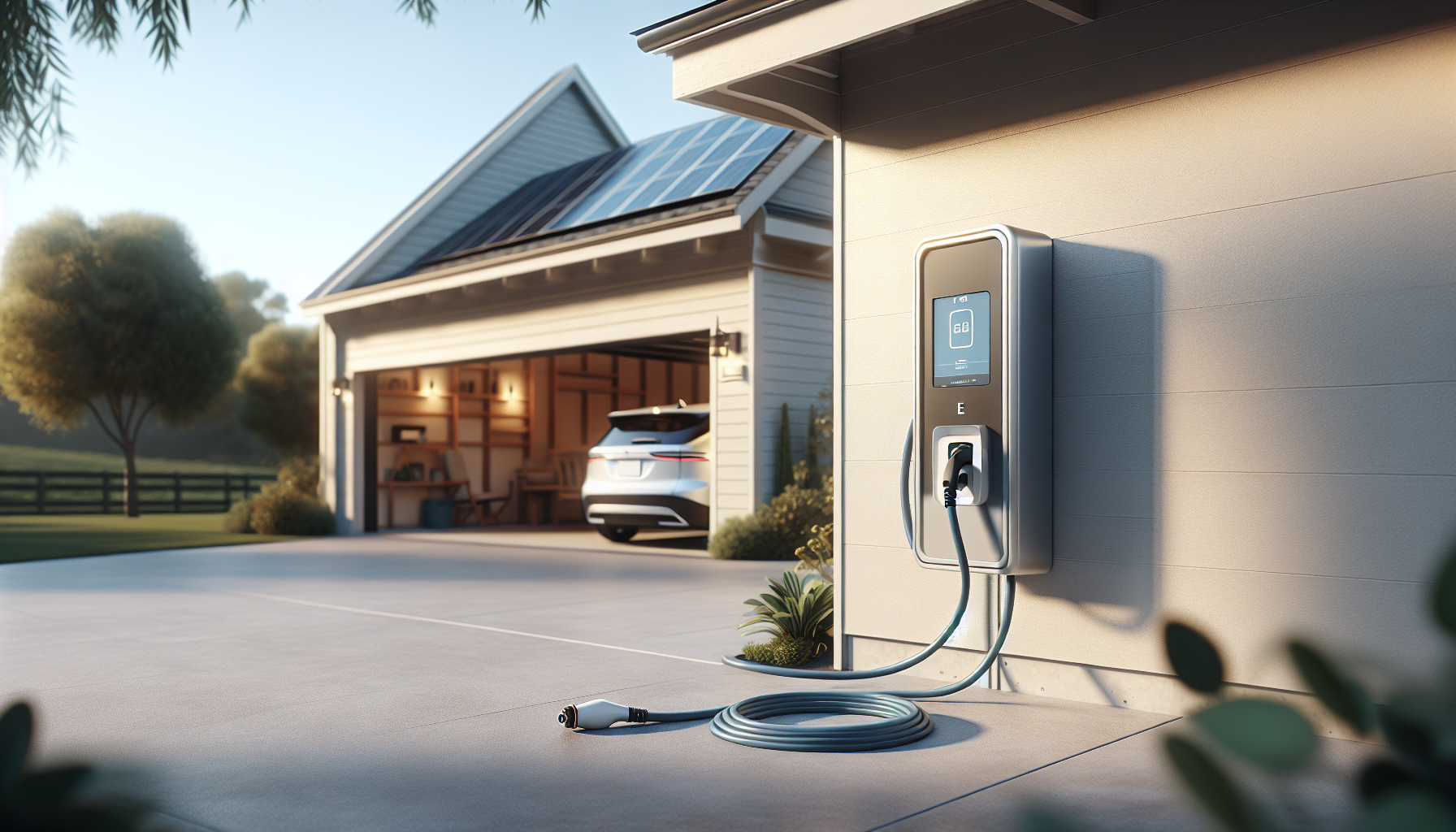
Home EV Charging Station Installation Guide
Are you ready to set up reliable, efficient EV charging right at your home so you can power your vehicle with convenience and cost savings?
Home EV Charging Station Installation Guide
This guide walks you through everything you need to know to install an EV charging station at home, with practical steps, costs, permitting guidance, and tips for integrating solar and battery storage. You’ll learn how to choose the right charger, prepare your electrical system, obtain permits, and work with professional installers — including why local expertise from companies like Nevada Solar Group matters in Nevada.
Why install a home EV charger?
Installing a home EV charger gives you faster charging, more convenience, and better control over charging times and costs compared with relying on public stations or a standard wall outlet. You’ll also be able to take advantage of off-peak rates, coordinate charging with solar production, and increase your home’s value.
Types of EV Chargers: Which one fits your needs?
You have three main categories of chargers to consider: Level 1 (120V), Level 2 (240V), and DC fast charging. Each has different power levels, installation needs, and cost implications.
Level 1 (120V) — simple and low-cost
Level 1 chargers use a standard 120V outlet and are the simplest way to charge. They’re best if you drive few miles daily or have long overnight charging windows. You’ll only need an outlet, but charging speed is slow.
- Typical power: ~1.2–1.4 kW
- Charging speed: ~3–5 miles of range per hour
- Installation: minimal; often no electrician required
- Cost: lowest hardware cost, negligible installation if you already have a suitable outlet
Level 2 (240V) — the most common residential choice
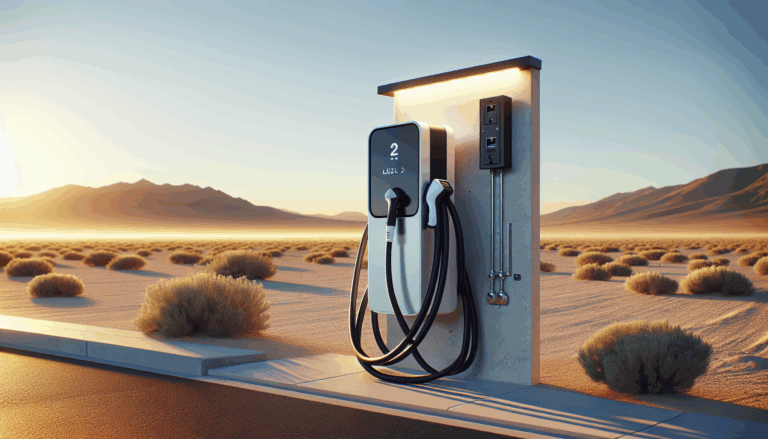
Level 2 chargers are ideal for most homeowners because they offer much faster charging and are supported by modern EVs. They require a dedicated 240V circuit and are usually mounted on a garage wall or pedestal.
- Typical power: 3.3 kW up to 19.2 kW for home installations (common home units 7.2–11.5 kW)
- Charging speed: ~10–40 miles of range per hour depending on amperage
- Installation: requires a dedicated circuit, wiring, and possibly a panel upgrade
- Cost: moderate — charger hardware plus electrician labor
DC Fast Charging — high power, usually commercial
DC fast chargers provide very fast charging but are typically not suitable for standard residential service due to very high power requirements. These are most often installed at commercial locations or multi-family complexes with significant electrical upgrades.
- Typical power: 25 kW up to 350+ kW
- Use case: public stations, fleet depots, commercial facilities
Key factors to consider before installing
Before you pick hardware, you’ll want to evaluate your parking location, daily driving habits, electrical panel capacity, local permitting rules, and whether you want solar + battery integration.
Parking location and cable reach
Choose a mounting location where your charging cable reaches your vehicle’s inlet without stretching. If you park on the street or in a detached garage, longer cable runs or conduit will be needed.
Daily driving and charging goals
Estimate how much charging you’ll need per day. If you drive 30–50 miles daily, a 7.2 kW Level 2 unit will usually be sufficient to fully replenish your battery overnight.
Electrical service capacity
Check your home’s main breaker size (commonly 100A, 150A, 200A). Many Level 2 installations require a dedicated 30–50A circuit; if your panel is already near capacity, a service upgrade might be needed.
Solar and battery integration
If you have, or plan to install, solar panels and battery backup (like Tesla Powerwall), you can charge your EV from clean solar energy and maintain resilience during outages. Nevada Solar Group offers full integration services so you can coordinate EV charging with solar production and Powerwall storage.
Step-by-step installation process
This is a typical workflow from planning to activation. Timelines vary by local permitting and whether upgrades are needed.
1. Initial assessment and planning
You’ll evaluate the best charger type, location, and electrical requirements. A site visit will document panel capacity, available space, and potential wiring routes.
- What you’ll determine: required circuit amperage, panel space, conduit path, charger model selection
- Why it matters: accurate planning minimizes surprises and unexpected costs
2. Quotes and product selection
Get written quotes that include hardware, labor, permits, and any potential panel upgrades. Choose a charger that matches your EV and futureproofs for higher power if you plan to keep the same system for years.
- Consider smart chargers with Wi-Fi, scheduling, power-sharing, and solar integration features
- Ask about warranty terms for both hardware and labor
3. Permitting
Most jurisdictions require an electrical permit for a new 240V circuit. Your installer commonly pulls permits and schedules inspections with the authority having jurisdiction (AHJ).
- Common documents: electrical plans, load calculations, product spec sheets
- Timeline: permit approvals can range from days to several weeks depending on local workload
4. Electrical work and panel upgrades (if needed)
A licensed electrician will install a dedicated breaker, run conduit and wiring, and mount the charger. If your panel requires space or your service needs upgrading to 200A, this step could include replacing the main panel or adding a subpanel.
- Continuous load sizing: NEC requires 125% sizing for continuous loads like EV chargers
- Panel upgrade considerations: cost, timeline, utility coordination
5. Charger mounting and wiring
The installer will mount the charging unit, install the cable management, and connect the charger to the dedicated circuit. Grounding and GFCI protection are tested.
6. Inspection and activation
After installation, an electrical inspector verifies code compliance. Once approved, your installer will finish commissioning the unit and show you how to use it, connect the app, and set schedules.
7. Integration with solar and battery systems
If you have solar and battery storage, your installer will configure the charger to prioritize solar energy, set schedulers to coincide with peak solar output, or enable load management to avoid exceeding service capacity.
Electrical code and safety basics
Your installation must comply with the National Electrical Code (NEC) and local amendments. These are essential for safety and code compliance.
Dedicated circuit and breaker sizing
EV chargers require a dedicated circuit sized for continuous use. NEC typically mandates 125% factor on continuous loads, meaning a 32A continuous draw requires a 40A circuit, for example.
GFCI and overcurrent protection
Modern EV chargers include built-in ground-fault protection. The circuit and panel must still provide appropriate overcurrent protection and grounding.
Permits and inspections
Always obtain permits and pass inspections. This protects your home, maintains insurance validity, and ensures safe operation.
Hiring licensed professionals
Use a licensed electrician or certified installer. If you live in Nevada, working with a licensed local company like Nevada Solar Group ensures compliance with state codes and local utility requirements.
Costs and what affects pricing
Installation costs vary with charger model, wiring distance, panel condition, and local labor rates. Below is a simplified cost table to help you estimate.
Typical cost ranges
| Item | Typical cost range (USD) | Notes |
|---|---|---|
| Level 1 charger | $0–$300 | Often included with vehicle; low installation cost |
| Level 2 charger (hardware) | $300–$1,200 | Smart chargers tend to cost more |
| Basic installation (short run, panel space) | $300–$1,000 | Simple wiring and mounting |
| Moderate installation (longer run, conduit) | $1,000–$2,500 | Additional labor, trenching, or conduit |
| Panel upgrade (to free up space) | $1,500–$4,000+ | Replacing main panel or adding subpanel |
| Service upgrade (100A to 200A) | $2,000–$5,000+ | Utility coordination may be needed |
These are ballpark figures; your specific costs may vary. If you plan solar + battery integration or a Powerwall installation, budget accordingly for combined system design and interconnection.
Charger selection: key features to look for
Choose a charger based on charging speed, safety features, smart capabilities, warranty, and compatibility with your vehicle.
Charging power and amperage
Pick an amperage that matches your daily needs and available electrical capacity. Common residential units are 32A or 40A.
Smart features
Smart chargers let you schedule charging, monitor energy use, update firmware, and receive alerts. If you want to sync charging with solar production or time-of-use rates, look for advanced energy management features.
Safety and certifications
Look for UL listing, NEC compliance, and strong manufacturer warranty. Verify local AHJ acceptance for the model you choose.
Cable length and mounting
Ensure the cable length reaches your vehicle comfortably. Wall mounts and cable holders keep things tidy.
Load management and sharing
If you have multiple EVs or limited panel capacity, chargers with dynamic load management can share available power effectively.
Solar and battery integration: make charging greener and more resilient
Pairing your home EV charger with solar panels and battery backup gives you cleaner, cheaper charging and the ability to charge during grid outages if configured correctly.
How integration works
Solar generates energy during the day that can directly power EV charging or charge a battery. Battery systems like Tesla Powerwall can store solar energy and discharge it to supply your home or EV charger during the evening or a grid outage.
Benefits
- Lower charging costs by using solar energy
- Increased resilience during outages with battery backup
- Potential to reduce grid demand during peak hours
Considerations
System design must account for charge timing, inverter capabilities, and utility interconnection rules. Nevada Solar Group provides integrated design services to ensure your solar array, Powerwall, and EV charger work together efficiently.
Incentives, rebates, and tax credits
Incentives change frequently, so you should check current federal and Nevada-specific programs before planning. Common sources of savings include federal tax credits, local utility rebates, and state incentives.
Where to look for incentives
- Federal tax credits (e.g., incentives for solar/battery installations under federal programs; check current eligibility)
- State and local utility programs (NV Energy and local municipalities may offer rebates or incentives)
- Manufacturer or installer promotions (some installers, including local providers, may offer deals when combining services)
- Check databases like DSIRE and consult your installer for up-to-date guidance
Nevada Solar Group can help you identify applicable incentives and structure a combined solar, battery, and EV charging project to maximize available rebates and tax benefits.
Working with a professional installer
Hiring an experienced, licensed installer saves time and reduces risk. Local firms understand permitting, local codes, and utility processes.
Why local expertise matters
A local company like Nevada Solar Group understands Nevada’s climate, solar production characteristics, local permitting timelines, and utility policies. They can design integrated systems that take advantage of Nevada-specific incentives and ensure compliance.
What to ask potential installers
- Are you licensed and insured in Nevada?
- Can you pull permits and handle inspections?
- Do you offer integrated solar + battery + EV charging solutions?
- What warranties do you provide for hardware and labor?
- Can you provide references and recent project photos?
Timeline: how long does installation take?
Typical timelines vary:
- Simple Level 2 installation with no panel work: 1–3 days of work, permit and inspection timeline 1–3 weeks
- Installation requiring panel space or wiring runs: 1–2 weeks of work depending on complexity
- Service upgrade or major electrical revisions: several weeks including coordination with utility and inspector scheduling
A full solar + Powerwall + EV charging integrated project will take longer due to system design, equipment lead times, and combined permitting.
Maintenance, troubleshooting, and longevity
Proper maintenance will ensure the reliability and longevity of your charger and integrated systems.
Routine checks
- Inspect charging cable and connector for damage
- Ensure mounting brackets and anchors are secure
- Monitor charging logs and app notifications for errors
- Clean connectors occasionally with a dry cloth (follow manufacturer guidance)
Common issues and fixes
- Charger not starting: check breaker and connection, then consult installer
- Slow charging: confirm vehicle onboard charger limitation, charger settings, and circuit amperage
- App connectivity problems: check Wi-Fi signal or consider Ethernet connection
Warranties
Check manufacturer warranties for chargers and installer warranties for workmanship. Nevada Solar Group and major charger manufacturers typically provide coverage options you should review before purchase.
EV charger comparison table
This table summarizes the common residential options to help you decide.
| Feature | Level 1 | Level 2 (common home) | DC Fast Charge |
|---|---|---|---|
| Voltage | 120V | 240V | 400–900V DC |
| Typical power | 1.2–1.4 kW | 3.3–19.2 kW (commonly 7.2–11.5 kW) | 25 kW+ |
| Miles/hour | ~3–5 | ~10–40 | 60+ (varies) |
| Installation complexity | Low | Moderate | High |
| Typical cost (hardware + install) | <$500< />d> | $600–$4,000+ | $10k+ |
| Best for | Occasional charging, low daily miles | Most homeowners | Commercial, fleets |
Special considerations for Nevada homeowners
Nevada’s abundant sunshine makes solar + EV charging an excellent combination. Local incentives, solar-friendly climate, and utility policies can influence your design choices.
Solar production patterns
In Nevada, midday solar production is high. If you can shift charging to midday, you’ll maximize solar use and reduce grid dependence.
Local permits and utility coordination
Check local jurisdiction requirements in Las Vegas and surrounding areas. Nevada Solar Group’s local experience helps navigate permitting and NV Energy interconnection.
Roofing and panel integration
If you plan roof-mounted solar or roofing replacement, coordinate with your EV charger installation to optimize conduit routes and inverter placement. Nevada Solar Group offers roofing replacement, solar shingle installation, and can streamline combined projects.
Future-proofing and emerging technologies
As solar and EV technologies evolve, you may want to plan for future upgrades such as vehicle-to-home (V2H) capability, higher-power charging, or perovskite-silicon tandem panels.
Vehicle-to-home and vehicle-to-grid
V2H and V2G allow your EV battery to power your home during outages or to provide grid services. These capabilities are emerging and depend on vehicle and charger compatibility.
Solar panel trends (2025 and beyond)
Modern solar trends include higher-efficiency cell technologies (heterojunction, PERC refinements), bifacial panels, and thin-film tandem cells like perovskite tandem concepts. Solar shingles and aesthetic roof-integrated products also continue to improve for homeowners wanting integrated solutions.
Energy management systems
Advanced energy management allows dynamic allocation of solar, battery, and grid power for charging and home loads, optimizing cost and resilience.
Checklist: preparing for installation
Use this checklist to make sure you’re ready for the installation process.
| Task | Completed |
|---|---|
| Determine desired charger level (1 or 2) | [ ] |
| Identify preferred mounting location | [ ] |
| Check current panel main breaker rating | [ ] |
| Get at least two quotes from licensed installers | [ ] |
| Confirm whether permits will be required | [ ] |
| Ask installer about solar and battery integration | [ ] |
| Confirm timeline for permit, installation, and inspection | [ ] |
| Verify warranty and post-install support | [ ] |
| Arrange parking access for installer on installation day | [ ] |
| Register charger app and test charging after inspection | [ ] |
Frequently asked questions
Do I need a permit for a home EV charger?
In most cases, yes. A 240V circuit installation typically requires an electrical permit and inspection. Your installer should handle permitting.
How long does a Level 2 charger take to install?
Basic installations can often be completed in a day, but permitting and inspections can extend the total time to several weeks.
Can I use power from my solar panels to charge my EV?
Yes. With proper inverter and system design, you can use solar power to charge your vehicle directly or via a battery backup system like Powerwall.
Do I need to upgrade my electrical service?
Possibly. If your panel is full or your main breaker rating is low relative to the charger’s requirements, you may need a subpanel or service upgrade.
Can Nevada Solar Group install my EV charger and connect it to my solar + battery system?
Yes. Nevada Solar Group provides integrated solar, Tesla Powerwall, and EV charging installations and can help design a system that optimizes solar charging and home resilience.
Final tips and next steps
- Start with a site assessment to understand your electrical capacity and the best charger location.
- Get multiple quotes, and prioritize licensed installers who provide permits and inspections.
- Consider integrating charging with a solar and battery system for cleaner charging and outage resilience — Nevada Solar Group offers integrated solutions tailored to Las Vegas and greater Nevada.
- Keep future needs in mind: if you plan additional EVs or higher power charging, choose components and panel capacity that allow upgrades.
If you want, you can request a consultation with a trusted local installer to get a site-specific plan, cost estimate, and timeline. Working with an experienced local company helps you navigate Nevada’s permitting and utility landscape while maximizing the benefits of solar, battery backup, and smart EV charging. Nevada Solar Group 5145 S Arville St, Las Vegas, NV 89118 Phone: 702-899-5577 Email: info@nevadasolargroup.com Website: https://nevadasolargroup.com
Business Hours: Monday – Friday: 8:00 AM – 5:00 PM Closed Saturday and Sunday