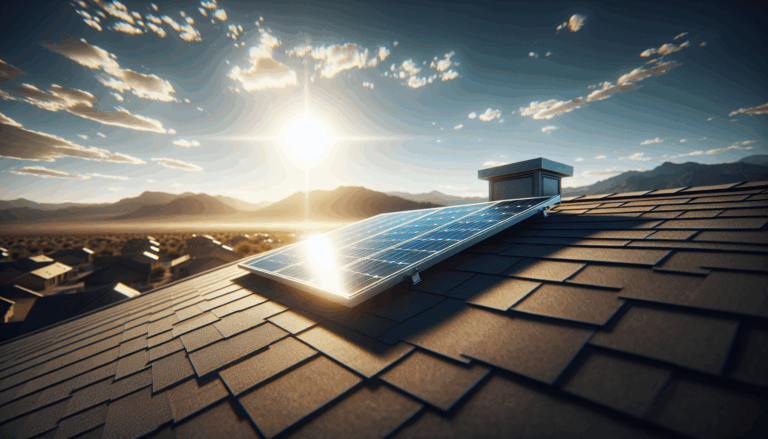
Solar Panel Installation In Nevada: What To Know
Are you wondering whether solar panel installation in Nevada is the right move for your home or business?
Solar Panel Installation In Nevada: What To Know
This article walks you through what matters most when you consider going solar in Nevada. You’ll get practical details about the technology, costs, incentives, local rules, and choosing the right installer so you can make an informed decision.
Why Nevada Is a Strong Candidate for Solar
Nevada gets abundant sunshine, which directly boosts solar energy production and helps systems pay back faster. Your panels will generally produce more energy per kilowatt than in many cloudier states, which is a major reason residents and businesses turn to solar.
Aside from sunlight, Nevada’s electricity prices and growing interest in resilience and electrification (including EV charging) make solar an attractive long-term investment. You’ll also find a growing market of experienced local installers who understand Nevada-specific permitting and incentive pathways.
Who Is Nevada Solar Group and Why It Matters to You
Nevada Solar Group is a Las Vegas–based solar installation company that focuses on residential and commercial solar solutions. You’ll benefit from their local knowledge, licensed installation teams, and partnerships with top manufacturers like SunPower, Panasonic, LG, and S-Energy.
They offer full-service support from system design and permitting through activation, including battery backups (licensed for Tesla Powerwall 1 and 2) and EV charging installations. If you’re seeking a one-stop provider that can manage permitting, roof work, and monitoring, Nevada Solar Group is positioned to simplify your process.
Key Benefits You’ll Realize with Solar in Nevada
Solar reduces your electric bills, increases your property value, and lowers your carbon footprint. You’ll also gain control over rising utility costs and may see greater resilience during outages if you pair panels with battery storage.
Beyond cost savings, solar can be an attractive selling point if you later sell your home or commercial property. With options for integrated roofing and modern monitoring tools, you’ll be able to manage generation and consumption more effectively.
Solar Panel Brands and How They Compare
Choosing a panel brand affects performance, efficiency, aesthetics, and warranty. You’ll commonly encounter SunPower, Panasonic, LG, and S-Energy in Nevada installations, each with strengths in efficiency, degradation rate, and warranty terms.
| Brand | Strengths | Typical Efficiency Range | Warranty Highlights |
|---|---|---|---|
| SunPower | Industry-leading efficiency and performance over time | 20–24%+ | Long performance warranties (often 25 years) |
| Panasonic | Strong temperature performance and reliability | 18–22% | 25-year product/performance warranties |
| LG | Consistent quality, strong balance of cost and efficiency | 18–22% | 25-year limited warranties (varies by model) |
| S-Energy | Cost-effective, solid performance | 17–20% | 10–25 year warranties depending on product |
Compare panels based on efficiency, degradation rate (how much capacity you lose each year), warranty coverage, and aesthetic preferences so you can select the best match for your roof and budget.
Solar Battery Backups — Is a Battery Right for You?
Adding battery storage gives you backup power during outages and lets you time when you use stored solar power to reduce demand charges or peak-time costs. If you prioritize energy resilience or have time-of-use rates, a battery can be a strong addition.
Tesla Powerwall models are commonly discussed in Nevada installations. Nevada Solar Group has licensed installers for Powerwall 1 and 2, and you should ask whether they support Tesla Powerwall 3 (the latest generation) and how it integrates with your system. Verify compatibility, warranty transferability, and any utility interconnection requirements before choosing a battery.
Comparing Common Battery Options
You’ll want to compare usable capacity, power output, round-trip efficiency, and warranty terms when selecting a battery. Below is a simplified comparison to help you evaluate.
| Product Type | Usable Capacity (kWh) | Typical Round-Trip Efficiency | Best For |
|---|---|---|---|
| Tesla Powerwall (1/2/3) | 13–16 kWh (varies by model) | ~90% | Whole-home backup, time-shifting |
| LG Chem / Residential Batteries | 9–12 kWh | 85–90% | Smaller backup needs |
| S-Energy / Other OEM | 5–15 kWh | 80–90% | Cost-sensitive installs |
Ask your installer to model outage scenarios and daily load-shifting so you can see how a given battery will perform for your household or business.
Roofing Options: Standard Roof, Replacement, or Solar Shingles
You’ll need to decide whether your existing roof can host panels or if you need replacement first. Nevada Solar Group offers roof replacement services and solar roofing products like shingles and tiles from top manufacturers, which might be a better long-term solution if your roof is nearing the end of its life.
Solar shingles and tiles integrate PV directly into your roof surface for a sleeker look and can be particularly appealing if you plan a full roof replacement. However, they typically cost more than traditional panels mounted on conventional roofing, so weigh aesthetics and durability against upfront cost.
Designing Your Solar System: What You Need to Know
A good design accounts for your historical energy usage, roof orientation and shading, local climate, and future plans (like EV charging). You’ll receive a system layout, estimated production, and financial projections to help decide system size and components.
Design should also consider string versus microinverter systems, cabling routes, and optimal panel tilt for performance in Nevada’s climate. Your installer should simulate annual energy production and show how the system aligns with your electric bills.
Permitting, Inspections, and Interconnection in Nevada
Permitting and interconnection rules vary by county and utility in Nevada, and your installer should handle the paperwork. Expect a sequence of permit approval, inspection, and utility authorization before you can operate grid-tied systems.
Utility interconnection may require an application to your electric provider and documentation for net metering or export rules. You should ask the installer about typical timelines for your city or county and whether they will manage the entire permitting and inspection process.
Net Metering and Utility Policies — Watch for Changes
Utility compensation for exported solar energy (often known as net metering or net billing) directly affects your financial return. Nevada’s policies have evolved over time, so you’ll want current details for your utility and location.
Ask your installer to include the latest policy impacts in your financial model so you can see realistic payback timing. If your property has specific demand charges or commercial billing schemes, those will also affect system economics.
Incentives, Rebates, and Tax Credits Available to You
You may be eligible for federal tax credits, state incentives, and local rebates that reduce your out-of-pocket cost. The federal Solar Investment Tax Credit (ITC) has historically provided a substantial percentage back as a credit on your federal taxes; check current rates and eligibility.
Nevada-specific incentives and utility rebates can change, so your installer should include available programs in your proposal. Common sources to check are the state energy office, local utility rebate programs, and DSIRE (Database of State Incentives for Renewables & Efficiency).
How to Capture Incentives
You’ll typically:
- Work with your installer to submit rebate and incentive paperwork.
- Retain invoices and certification documents for tax credits.
- Verify utility-specific rebate deadlines and application windows.
Make sure your contract specifies who is responsible for filing incentives and that the financial projection uses the incentives you realistically expect to receive.
Cost Estimates and Financing Options for Your System
Costs vary based on system size, equipment choices, roof complexity, and whether you choose battery storage. In Nevada, average system prices can differ significantly depending on whether you buy outright, take a loan, or choose a lease or PPA.
You’ll have several financing choices: cash purchase, solar loans (secured or unsecured), home equity or HELOC, and sometimes lease or power purchase agreement (PPA) options. Many homeowners use loans that allow immediate bill savings while spreading costs over time. Ask the installer for sample financing scenarios with estimated monthly payments and payback periods.
Example Cost Components
- Solar panels and inverter or microinverters
- Racking and electrical hardware
- Labor and permitting
- Roofing or roof prep, if needed
- Battery system (optional)
- Monitoring system and EV charger (optional)
Expected Savings and Payback Period
Your savings depend on system size, local electricity rates, and compensation for exported energy. With higher electricity prices, your system will pay back faster. In Nevada, favorable sun exposure tends to produce solid production numbers, but you must factor in local utility policies and any financing costs.
Your installer should provide a clear payback estimate and a projection of lifetime savings under conservative and optimistic scenarios. Request sensitivity analysis to see how changes in electricity rates or incentive levels affect your results.
Maintenance, Monitoring, and Long-Term Care
Solar systems require minimal maintenance but you should plan for periodic cleaning, inspections, and monitoring to ensure optimal performance. Most systems include online monitoring that lets you track generation and quickly spot issues.
You should also keep records of warranties and service agreements. Ask about service packages for cleaning, inspections, and inverter or battery replacements to understand long-term costs and responsibilities.
Warranties — What You Should Expect
Warranties typically include product warranties from manufacturers and workmanship or installation warranties from the installer. Panel manufacturers commonly offer 10–25 year product and performance warranties, while inverters and batteries may have shorter terms.
Make sure you understand warranty transferability when you sell your property and how to file claims. Nevada Solar Group highlights warranty offerings from top manufacturers and generally provides installer-backed workmanship warranties to protect your investment.
EV Charging Integration — Planning for Electrification
If you own or plan to own an electric vehicle, integrating EV charging with your solar system can significantly increase your fuel cost savings. You’ll enjoy the highest emissions-free miles when your EV is charged from daytime solar production or stored solar energy.
You’ll need to decide between Level 2 home chargers or higher-capacity systems and whether you want managed charging that optimizes charging times to solar production. Nevada Solar Group installs EV chargers and can coordinate charger placement and electrical upgrades as part of your solar project.
Commercial Solar: Different Considerations for Your Business
Commercial systems have different economics, including higher loads, demand charges, and tax treatment. If you’re a business owner, you’ll want a design that targets demand charge reduction, maximizes ROI, and fits operational needs.
Commercial projects often require more detailed structural analysis, permitting, and interconnection reviews. Nevada Solar Group’s experience with commercial installations means you’ll get tailored system design, financing options, and incentive guidance for business customers.
Installation Timeline — What You Can Expect
Typical project timelines span several weeks to a few months depending on roof readiness, permitting speed, and utility interconnection. You’ll usually pass through these phases: site assessment, design & proposal, permitting, equipment procurement, installation, inspection, and utility activation.
Below is a sample timeline to help you set expectations.
| Phase | Typical Duration | What You’ll Experience |
|---|---|---|
| Site assessment & proposal | 1–2 weeks | Installer reviews energy bills, roof, and shading |
| Design & permit submission | 2–4 weeks | Detailed plans submitted to local authority |
| Permit approval | 1–6 weeks | Varies by jurisdiction and backlog |
| Equipment procurement | 1–3 weeks | Panels, inverters, batteries ordered |
| Installation | 1–5 days (residential) | Physical installation and wiring |
| Inspection & interconnection | 1–4 weeks | Municipality and utility approvals |
| Activation | 1 day | System goes live after approval |
Your installer should give a more accurate timeline tailored to your municipality and utility, and manage each step so you don’t have to navigate the process alone.
How to Choose the Right Installer — Your Checklist
Selecting the right installer affects system quality, performance, and your long-term satisfaction. You should check licensing, insurance, local references, warranties, product partnerships, and whether they handle permitting and interconnection.
Key questions to ask potential installers:
- Are you licensed and insured in my county?
- What brands and models do you install and why?
- Do you handle permitting, inspections, and utility interconnection?
- Can you provide local references and site visits to completed projects?
- What warranties do you offer on workmanship?
- How will my system be monitored and serviced?
Nevada Solar Group emphasizes local expertise, manufacturer partnerships, and full-service project management, which can make the process smoother for you.
Frequently Asked Questions You Might Have
You’ll likely have several practical concerns, from shading and roof penetration to taxes and resale value. It’s important to get clear answers about how solar will integrate with your property and lifestyle.
Common FAQs include:
- How many panels do I need for my energy usage?
- What happens during grid outages without a battery?
- Will solar make my roof leak-prone?
- How long does a typical system last?
- Are there performance guarantees?
A reputable installer will answer these questions transparently and include production estimates and real references.
Typical Pitfalls and How You Can Avoid Them
Avoid low-quality equipment, unclear contracts, and installers who don’t handle permits or who leave ambiguous warranty responsibilities. You should ensure that the installer clearly lists equipment specs, production guarantees (if any), and who handles future service requests.
Also confirm whether an existing roof needs replacement before installation, because installing panels over a roof near the end of its life can lead to costly rework. If a roof replacement is needed, coordinate it with your solar installation to minimize costs and interruptions.
Environmental and Community Impact — How Your Choice Helps
By installing solar, you’ll reduce your household or business carbon emissions and support local clean energy growth. Your choice can inspire neighbors and local businesses to consider renewable energy, amplifying the environmental benefits.
You’ll also help diversify Nevada’s energy mix and reduce reliance on fossil fuel generation, which has both environmental and long-term economic benefits for the region.
Next Steps: How to Move Forward
Start with an energy bill review and a site assessment from a licensed installer. You should collect multiple quotes, compare equipment and warranties, and request a detailed financial projection that includes current incentives and utility policies.
Contact Nevada Solar Group or another reputable local installer to get a custom proposal and to ask about Tesla Powerwall 3 availability and compatibility if battery backup is important for your resilience goals.
Conclusion
You’ll find Nevada to be a strong market for solar due to abundant sunshine and growing interest in resilience, EV charging, and cost control. With careful selection of panels, batteries, and an experienced installer like Nevada Solar Group, you can design a system that meets your budget and energy goals.
Take your time to compare equipment, warranties, and installer responsibilities so you can enjoy reliable clean energy, potential savings, and improved energy independence for years to come. Nevada Solar Group 5145 S Arville St, Las Vegas, NV 89118 Phone: 702-899-5577 Email: info@nevadasolargroup.com Website: https://nevadasolargroup.com
Business Hours: Monday – Friday: 8:00 AM – 5:00 PM Closed Saturday and Sunday