Combining Solar Panels And Tesla Powerwall
?Have you thought about combining solar panels and a Tesla Powerwall to make your home more resilient, cut your electric bills, and increase your property value in Nevada?
Why combine solar panels and a Tesla Powerwall?
Pairing solar panels with a Tesla Powerwall lets you capture energy from the sun and store it for use any time — at night, during outages, or when electricity rates spike. When you add a Powerwall, you transform a solar system from a production-only setup into a full energy management solution that gives you reliability and flexibility.
The main advantages in plain terms
You get backup power during outages, lower grid dependence, and better control of when you use and store energy. Over time, you can reduce utility bills by shifting consumption away from high-rate periods and by exporting excess energy when it’s beneficial.
Who benefits most from this setup?
If you live in a place with plenty of sun — like Las Vegas and greater Nevada — and you want lower long-term energy costs or backup power for safety and comfort, this combo is a strong match. Businesses, homeowners with EVs, and anyone who wants to increase property value will also see clear benefits.
Understanding Tesla Powerwall: versions and capabilities
Tesla Powerwall has been one of the most popular residential battery backup systems on the market, available initially as Powerwall 1 and later as Powerwall 2 (and subsequent improvements). The unit is designed to store excess solar energy and provide backup power or load shifting functionality.
Key specs and what they mean for you
Powerwall 2 offers roughly 13.5 kWh of usable capacity and a continuous power output sufficient to run most homes’ essential circuits. This translates to multiple hours of backup for some loads, or to shifting a portion of daytime solar production into evening use to avoid high utility rates.
Table: Powerwall 1 vs Powerwall 2 (typical installed features)
| Feature | Powerwall 1 | Powerwall 2 |
|---|---|---|
| Usable capacity | ~6.4 kWh | ~13.5 kWh |
| Continuous power | ~2 kW | ~5 kW |
| Peak power | Lower | ~7 kW (short-term) |
| Round-trip efficiency | ~88% | ~90% |
| Typical warranty | 10 years | 10 years |
| Best fit | Small backup loads | Whole-home backup for many homes |
Note: Exact specifications and warranty details can change by model revision and region. Confirm current specs with your installer and Tesla.
How solar panels and a Powerwall work together
The basic flow is simple: solar panels generate electricity, which supplies household demand first. Excess generation charges the Powerwall and, if still in surplus, may be exported to the grid depending on interconnection settings and net metering rules.
Daytime and nighttime dynamics
During the day, your panels power appliances and charge the battery. At night or during an outage, the Powerwall discharges to meet your household needs, reducing or eliminating grid usage. This cycle improves self-consumption and creates resilience.
Grid interaction and settings
You can configure the system to prioritize charging the battery, exporting to the grid for compensation, or balancing both based on time-of-use rates. A licensed installer like Nevada Solar Group will help you choose settings that reflect your goals — whether that’s maximizing savings, resilience, or both.
Choosing solar panels for pairing with Powerwall
Your panel choice affects system performance, roof usage, and aesthetics. Nevada Solar Group offers options from SunPower, Panasonic, LG, and S-Energy — each with different efficiency, warranty, and price characteristics.
High-efficiency panels vs cost-effective options
High-efficiency panels (e.g., SunPower) give more power per square foot and can be ideal for limited roof space. Lower-cost panels with good warranties can give strong value when you have ample roof area.
Table: Quick brand comparison (typical characteristics)
| Brand (example) | Efficiency | Typical warranty | Best for |
|---|---|---|---|
| SunPower | Very high | 25 years (panel + performance) | Small roofs, max production |
| Panasonic | High | 25 years | Strong performance/temp tolerance |
| LG | High | 25 years | Balanced performance and look |
| S-Energy | Good | 10–25 years | Cost-conscious installations |
Ask your installer to review panel performance in Nevada’s climate, including heat tolerance and low-light performance.
Inverters and compatibility with Powerwall
Inverters convert DC power from solar panels into AC power for your home. Tesla Powerwall is typically AC-coupled, which means it pairs well with existing AC inverters and can be installed on new systems designed around that topology.
AC-coupled vs DC-coupled systems
AC-coupled systems (Powerwall common approach) convert solar to AC then charge the battery via AC. DC-coupled systems charge batteries directly from the solar DC output, then invert to AC for loads. Each has pros and cons around efficiency, retrofit ease, and design complexity.
What that means for you
If you already have solar, Powerwall can often be added without replacing inverters. For new installs, your design team will recommend inverter choices and architecture that optimize performance and reliability.
Sizing your solar + Powerwall system: practical steps
Choosing the right size battery and solar array depends on your energy usage, outage tolerance, budget, and roof. You’ll want to consider daily kWh usage, peak loads, and whether you need whole-home backup or just critical loads.
Step 1 — Know your average usage
Look at your electric bills for a 12-month period and calculate average daily kWh. Most U.S. homes average around 25–30 kWh/day, but hot climates can push usage higher. Knowing your consumption is the foundation of a good design.
Step 2 — Decide what you want to back up
If you only need critical circuits (fridge, lights, a few outlets), your battery needs will be smaller than if you want to power HVAC, EV charger, and the whole house. Critical-load targeting lets you buy fewer battery kWh while preserving essential functions.
Step 3 — Match solar production to battery goals
If your goal is to charge your Powerwall each day from solar, size your solar array to produce enough excess energy mid-day. For example, if you want one fully charged Powerwall (13.5 kWh) per evening, you’ll need solar that creates that excess above daytime loads — exact size depends on panel efficiency and sun hours.
Example calculation
If your home uses 30 kWh/day and you want two Powerwalls for roughly full-day resilience (27 kWh usable), you might pair a 7–10 kW solar array depending on your location, roof orientation, and energy efficiency. A licensed installer will provide a precise model for your site.
Costs, incentives, and paying for the system in Nevada
Costs vary widely based on system size, panel brand, number of Powerwalls, and labor. You should expect a range and get quotes tailored to your home. Incentives can materially lower up-front costs.
Typical cost components
You’ll pay for the solar panels and racking, inverter(s), Tesla Powerwall unit(s), electrical upgrades, permitting, labor, and potentially a Gateway for Powerwall backup management. Additional costs arise for roof work, EV charger wiring, or complex interconnection.
Incentives to consider
- Federal Investment Tax Credit (ITC): As of recent federal policy, buyers may be eligible for a significant federal tax credit (percentage may vary by current law).
- State and local incentives: Nevada may have rebates, utility programs, or net metering structures that help economics; these change over time.
- Utility programs and net metering: NV Energy’s rules on compensation for exported power can affect payback and system design. Check current Nevada Solar Group guidance for the latest details.
Note: Incentive programs and tax credits change. Always confirm current eligibility and amounts with your tax advisor and your installer.
Typical price ranges (ballpark)
- Small rooftop solar system (3–5 kW): several thousand dollars to tens of thousands before incentives.
- Medium system (6–10 kW): often tens of thousands before incentives.
- Powerwall installed unit: mid-to-high four-figure to low five-figure range per unit, depending on site complexity and required balance-of-system work.
Because costs and incentives change, request a site-specific quote. Nevada Solar Group can provide personalized cost estimates and financing options.
Financing and return on investment
You can purchase outright, take financing through loans or solar leases/PPA structures, or use specialized solar loans. Financing often enables immediate savings via lower monthly payments than previous utility bills.
How to estimate payback
To find payback, subtract expected annual savings from the net installed cost after incentives and divide the result into the net cost. Consider that value includes avoided outage risk, increased property value, and future utility rate inflation.
Non-financial returns
Resilience during outages, lower emissions, and enhanced home value are meaningful returns that don’t always show up on a simple payback timeline.
Installation process when working with a licensed installer like Nevada Solar Group
A good installer makes the journey straightforward: site assessment, system design, permitting, installation, inspection, interconnection, and activation. Nevada Solar Group emphasizes streamlined service from consultation through activation.
Step 1 — Site assessment and design
A professional assessment includes roof condition, shading analysis, electrical panel review, and load study. The design team will select panels and the number of Powerwalls that align with your goals.
Step 2 — Permitting and utility coordination
The installer will manage permits, HOA notifications if required, and interconnection paperwork to NV Energy or local authorities. Licensed installers are familiar with local codes and typical inspection timelines.
Step 3 — Physical installation
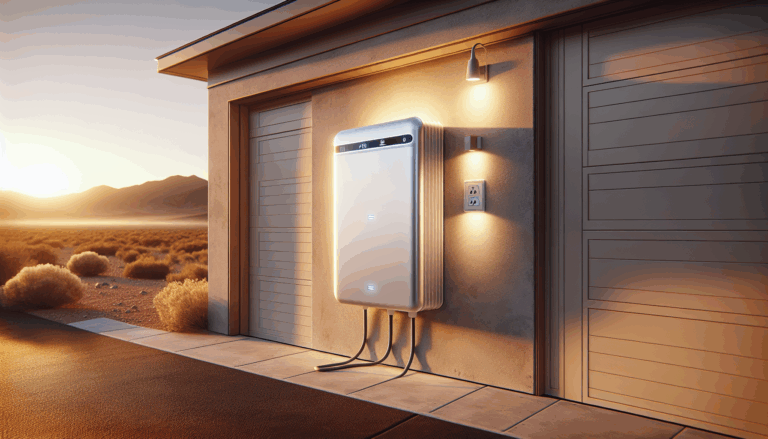
Installers mount panels, install the Powerwall(s) on an exterior wall or garage, run wiring, and install any necessary switches or gateways for backup. Work is coordinated to minimize disruption to your household.
Step 4 — Inspection and activation
After inspection and approved interconnection, the system is commissioned and you can begin monitoring performance through apps. Your installer will walk you through system operation and warranties.
Roofing, solar shingles, and roof replacement
If your roof is aging or needs replacement, coordinate roof work with solar installation to avoid redoing the solar racking later. Nevada Solar Group offers roofing replacement and solar shingle/tile options from top manufacturers.
When to replace a roof before solar
If your roof has less than 5–7 years remaining in expected life, replacing it before solar installation can be more cost-effective. Combining projects reduces labor and rework costs.
Solar shingles and tiles
If you prefer integrated aesthetics, solar shingles and tiles from leading manufacturers offer a cohesive look while generating power. Discuss trade-offs around cost, efficiency, and warranty coverage with your installer.
EV charging integration
Pairing solar + Powerwall with EV charging increases the value of your system by allowing you to charge your vehicle with clean, self-produced energy. Nevada Solar Group installs EV charging stations and can design a system that optimizes charging times for cost and solar production.
Smart charging strategies
You can set charging schedules to coincide with peak solar production or low-rate hours, and use stored energy to top up your EV when needed. Smart charging minimizes grid impact and maximizes use of solar energy.
Considerations for EV owners
EV chargers increase peak loads, which can influence inverter sizing and battery count. Plan a system that meets your home’s daily driving energy needs and desired backup level.
Monitoring, control, and apps
Modern systems include apps that show real-time production, consumption, and battery state of charge. These tools let you see the impact of energy choices and adjust settings for performance or backup priorities.
What monitoring shows you
You’ll see solar production, how much goes to the grid, how much charges the Powerwall, and your household consumption. This transparency helps you fine-tune behavior to save more.
Automated controls and remote support
Your installer can often set default modes such as “backup-only,” “self-consumption,” or “time-based control” depending on your preferences. Nevada Solar Group provides customer support to help you use these features effectively.
Backup strategies and modes
Powerwall systems can be configured for different backup behaviors: full-home backup, partial load backup, or critical-load backup. Each option balances how many circuits you keep powered during an outage with cost and system complexity.
Whole-home backup
Whole-home backup aims to power your entire home after an outage, but this requires enough battery kWh and inverter power rating to handle HVAC, water heaters, and other large loads. It’s the most comprehensive but also most resource-intensive.
Critical-load backup
Critical-load backup isolates circuits you want to protect (fridge, lights, certain outlets), resulting in smaller battery needs and lower costs. This is a common approach for homeowners prioritizing life-safety and comfort.
Maintenance, lifespan, and warranty
Batteries and panels require little everyday maintenance, but occasional checks help performance last. Panels typically degrade slowly over decades; Powerwall carries a 10-year warranty that covers capacity retention and component defects.
Routine maintenance steps
Keep panels free of debris and check for visible damage. Have your installer or maintenance contractor inspect system grounding, conduit, and mounting hardware periodically.
Warranty and performance guarantees
Solar panel manufacturers often provide 25-year performance warranties, while Powerwall typically includes a 10-year limited warranty for energy retention and product defects. Keep documentation handy and follow scheduled service recommendations to preserve warranty coverage.
Safety and code compliance
Battery systems follow electrical codes and safety protocols for installation and fire prevention. Licensed installers will follow NEC (National Electrical Code) and local Nevada building codes to ensure safe operation.
Fire safety and disconnects
Powerwall installations include automatic disconnects, rapid shutdown options, and clear labeling to assist first responders. Confirm your installer provides required safety documentation and coordinates with local authorities as needed.
How Nevada Solar Group helps homeowners in Las Vegas and Nevada
Nevada Solar Group brings local installation expertise, manufacturer partnerships, and customer-focused service to make solar + battery adoption straightforward. They’re a licensed installer of Tesla Powerwall 1 and 2 and work with leading solar panel brands.
Local knowledge matters
Your climate, utility rules, and local permitting are specific to Nevada; working with a local company helps you avoid surprises. Nevada Solar Group knows local net metering, incentive cycles, and common rooftop conditions in Las Vegas and surrounding areas.
Full-service offering
From system design and engineering to roofing replacement, EV charger installation, and energy monitoring, Nevada Solar Group can handle the full project scope. That reduces coordination hassle and ensures consistent warranty support.
Common questions homeowners ask (FAQ)
These are common concerns homeowners raise when considering solar and battery storage.
Will a Powerwall provide whole-home backup?
It can, depending on how many Powerwalls you install and your home’s energy demands. For larger homes or heavy HVAC use, multiple Powerwalls or load-limiting strategies may be required.
Can I add Powerwall to an existing solar system?
Yes, often without replacing major components. An AC-coupled Powerwall is commonly added to existing systems; an inspection will determine compatibility and any required electrical upgrades.
How many Powerwalls do I need?
That depends on your daily kWh use, outage expectations, and whether you want to run high-draw appliances. Your installer will model scenarios to show how many units meet your needs.
Are there financing options?
Yes — cash purchase, loans, and sometimes PACE or solar-specific financing are available. Financing terms and availability vary, so talk to Nevada Solar Group about current offerings.
How long does installation take?
A typical rooftop solar + Powerwall installation may take a few days of actual work, though the overall timeline including permitting and inspections usually spans several weeks. Local permitting timelines and utility interconnection processing can affect total time to activation.
Checklist for planning your solar + Powerwall project
Use this checklist to prepare for a consultation and to compare proposals.
- Collect 12 months of electric bills to show usage patterns.
- Note roof age, shingle condition, and any upcoming roof work.
- Decide on backup priorities (critical circuits vs whole-home).
- List EV charging needs and typical daily miles driven.
- Ask for detailed proposals showing panel brand, inverter, Powerwall count, and warranties.
- Confirm who handles permitting, HOA paperwork, and interconnection.
- Check financing options and incentive assumptions in the quote.
- Verify installer licensing, insurance, and references.
Decision factors to weigh before committing
Consider budget, roof condition, energy goals, and appetite for resilience versus simple bill reduction. Also compare warranties, local installer reputation, and the clarity of the proposal.
Long-term value considerations
Solar + Powerwall is a long-term investment that can pay off through utility savings, increased property value, and peace of mind during outages. Consider how long you plan to live in the home, potential changes in utility rates, and planned EV adoption.
Final practical tips
Get multiple quotes, but prioritize installers who provide transparent pricing, warranty management, and local service. Ask for a performance estimate under realistic Nevada sun conditions and confirm the assumed incentive and net metering scenarios.
Working with Nevada Solar Group
If you choose Nevada Solar Group, you’ll be working with a locally focused team that installs top panel brands, is a licensed Tesla Powerwall installer, and offers a full suite of services including roofing, EV charging, and ongoing monitoring. Their local experience can simplify project timelines and help you capture available incentives.
Wrapping up
Combining solar panels and a Tesla Powerwall creates a resilient, flexible home energy system that’s particularly well suited to sunny Nevada. By carefully sizing the system, understanding costs and incentives, and using a licensed local installer for permitting and installation, you’ll get a system that lowers bills, increases comfort, and keeps your lights on when you need them most.
If you want a site-specific estimate, detailed system design, or help comparing panel brands and Powerwall counts for your home, reach out to a licensed installer like Nevada Solar Group so you can see precise numbers tailored to your roof, loads, and goals. Nevada Solar Group 5145 S Arville St, Las Vegas, NV 89118 Phone: 702-899-5577 Email: info@nevadasolargroup.com Website: https://nevadasolargroup.com
Business Hours: Monday – Friday: 8:00 AM – 5:00 PM Closed Saturday and Sunday